Wednesday, September 21, 2011

A Potential Threat to Sinharaja World Heritage Site

Green Gold Rush in the 21st Century:


By Nimal Gunatilleke

Sinharaja, the jewel in the crown of Sri Lanka’s natural forests, was once rescued from the jaws of destruction by a highly controversial selective logging project implemented in the 1970s primarily for the manufacture of plywood to make tea chests and furniture. At that time, this epic feat was achieved thanks to a collective effort by a cohort of dedicated environmentalists, religious leaders and scientists, both local and overseas, who were able to convince the then government that the long-term benefits by conserving this magnificent forest far outweighs the short-term foreign-exchange saving/earning project, whose sustainability was questionable. Looking back over 34 years, this decision to save Sinharaja from selective logging at the scale it was planned had not only been a visionary accomplishment, but was also a forerunner to several land-mark decisions taken by the successive governments towards conservation and sustainable development of our natural heritage for the benefit of current populace without compromising the survival of the future generations.

The second threat to the survival of Sri Lankan forests, even more serious than the first, came as a contentious Forestry Master Plan in 1983. It proposed the creaming off of all the remaining natural forests under the guise of sustainable timber management. It was, in a way, a multiplied version of what was proposed for Sinharaja in the 1960s and implemented in the 1970s. Thanks once again to the conservation-minded public opinion that prevailed at the time, the original master plan had to be withdrawn amidst strong public voice against it. Instead, a natural forest conservation plan was prepared by the very same consultants, which was later approved by the government. The public opinion both local and international, against the original master plan was so strong and convincing that the revised master plan recommended a moratorium on selective logging of all natural forests, which is even valid to date. Another conservation friendly outcome of this revised plan was that the Forest Department of Sri Lanka established a separate unit known as the Environmental Management Division, mainly to address the issues of conservation of natural forests like Sinharaja.

As a result of all this, Sinharaja and most other conservation forests received much public attention. In particular, their biological value was disseminated far and wide, both nationally and internationally. Sinharaja became a house-hold name in Sri Lanka. Its biodiversity and conservation value has been included in educational curricula at the school level and other higher educational levels, and even in some international institutions. Consequently, its conservation value has well and truly permeated the society, in general.

The most recent reports on income generated from tourist visits for education and recreation to our protected area system as a whole has shown impressive economic gains. However, the real value of its services to Sri Lankans as a prime Natural Wilderness Area and to the world at large, as a World Heritage, is still very much under-valued, but just beginning to emerge. Continued studies, discoveries and research in Sinharaja over the past decades have increased our knowledge on its biological wealth, to some degree. A lot more remains yet to be revealed, particularly from little explored eastern Sinharaja.

Declaration of Sinharaja as a National Wilderness Heritage Area and its subsequent listing as a World Heritage Site under the UNESCO WHS Criteria xi and x of 2005 is now glorified history on which we are still basking. The darker yet unseen side of the story is that threats of encroachment primarily for tea and cardamom cultivation, construction of dwellings, illegal removal of plants and animals, pollution of waterways in the immediate surroundings from agrochemicals are ‘worming in’ at an accelerated pace from all sides of Sinharaja forest. The earlier threats to conservation of natural forests came as major internationally funded projects at a national level. The current threats to Sinharaja and other forests in the region are at the local level, unknown to the rest of the world, unless one is a frequent traveler to these areas or proficient in browsing the web and comparing recent satellite images with those of the 1990s taken by the forest mapping project under the British ODA (now DFID) project.

All these are happening while impressive progress has been made on paper on the implementation of recommendations of the Forestry Master Plan through a series of internationally funded projects. In comparison, in the field however, there is little evidence that forests like Sinharaja are effectively protected, in accordance with the recommendations in the Revised Forestry Master Plan. On the positive side, it is a fact that visitor facilities have been improved in the major forest areas like Sinharaja, KDN and Knuckles. Yet, the protection and restoration/rehabilitation aspects, in my opinion, have not kept pace with similar impetus. It looks as though much of the efforts of the Forest Department in recent times had been channeled to cope with the ever increasing influx of tourist traffic at the expense of protecting the forests from unauthorized activities.

This brings us to the main topic of this article. There have been a number of newspaper articles, editorials, press statements and the like recently on a new road being cut on the eastern sector of the Sinharaja range from Illimbekanda to Sooriyakanda to join the villages in Kalawana PS with that of Kolonne. Unlike the western sector of Sinharaja, its eastern counterpart with all its aesthetic beauty and charm has been a neglected area for a long time by the conservation agencies as well as scientists, although the biodiversity of this area could be as rich as that of the lowland western sector, based on recent studies particularly of amphibians, reptiles etc. For a long while, since the 1980s, we have been campaigning to annex the remaining forested areas of the eastern sector of Sinharaja range to the National Wilderness Heritage area of Sinharaja, at every workshop that we attended, almost every publication we wrote on this subject and also in local newspapers and other media based on field visits to most areas in this Rakwana Hill range, at every opportunity we got.

The current situation with respect to the general area through which the proposed road is to be made, as I understand, is as follows: Based on a presidential directive issued on 10 August 2001, all state forests bordering Sinharaja, Knuckles, Sri Pada Range and Kanneliya-Nakiyadeniya-Dediyagala (KDN) have apparently been vested with the Forest Department. These may be the forests that were formerly administered by the Provincial/District Councils in Ratnapura, Galle, Matara, Kandy and Matale (aka GAs’ Lands) and located in close proximity to the above protected areas. Another presidential directive, based on a report by a cabinet appointed committee to look in to the lands released between 2002.01.01 to 2004.03.01 by the Land Reform Commission, had been made to the then cabinet in July 2004 to acquire a list of 16 forested properties totaling 2,488 ha in Ratnapura, Galle and Matara districts. Among these that are of immediate relevance to this ‘road issue’ in eastern Sinharaja range are Illimbekanda (567 ha), Morningside (55ha) Aberfoil Estate (191 ha), Hayes Estate (137 ha) and Gongala area (138 ha), a total of 1,088 ha. A further cabinet decision for the same purpose has evidently been made on 22 July 2009.

Since then the relevant government agencies, mainly the Land Reform Commission (LRC) and the Forest Department, have been engaged in negotiations on the most parsimonious mechanism and the terms of transfer of these lands through physical boundary surveys and meeting the legal requirements of the transfer process. It is learnt that the Chairman of the LRC, in a more recent letter to the Forest Department, had informed that he has been receiving numerous complains about illegal activities and encroachments in LRC lands located near the perimeters of the Sinharaja World Heritage Site. As such, the LRC chairman has apparently requested that the Forest Department take necessary steps to acquire these lands for conservation of Sinharaja for its national heritage value. The LRC would subsequently be making claims for compensation. The lands listed in the LRC chairman’s letter include 12 parcels of land in Ratnapura district and four in Matara district. On the part of the Forest Department, we understand that the physical surveys have now been almost completed and tracings of final village plans (FVPs) have been prepared. Apparently, what remains to be done now is to legally acquire these lands under section 38(a) of the Forest Ordinance with the concurrence of the Ministry of Environment and Natural Resources.

In spite of two presidential directives, a prime minister’s directive and at least two cabinet decisions to acquire these lands vested with the LRC, all these governmental level administrative procedures have been going on for well over a decade or so. Regrettably, this process is still far from complete. In the mean time, land clearance for tea cultivation (Green Gold for these cultivators) is going on at an alarming rate all round Sinharaja, while forest understory clearance is expanding in eastern Sinharaja for cardamom cultivation. An excellent yet depressing account of the illegal activities going on in and around two selected villages - Kudawa (NW Sinharaja) and Warukandeniya (Southern Sinharaja) is given in a post-graduate thesis later published as a book in Sinhala titled "Sinharajaya Sanrakshanaya" by Mr. Harsha Perera, a dedicated conservationist and an attorney at law. His account was based on authentic quantitative information gathered himself between 2002 and 2003. Based on my own experience similar, if not much more, harm to the forest goes on all round Sinharaja, particularly because of the craving for land primarily to grow green gold -TEA.

Returning to the eastern Sinharaja road issue, a few weeks ago in the company of a small but very knowledgeable group of local explorer-scientists, I walked from the Sooriyakanda end of this proposed road trace along its entire length (about 3-4 km) to Illimbekanda and back. At the Suriyakanda end, the road trace starts as a motorable gravel/grass road, at first through a mature forest area under-planted with cardamom, which carried sign posts on either side of the road in Sinhala warning that the land is managed by Sinharaja Organic Farming Company and that trespassers to the land would be prosecuted. Beyond this point, the road continued through a former estate road with several still functional culverts over meandering forest streams. The road from here continues as a well-traversed foot path, through a mosaic of primary and regenerating secondary forest in different phases of growth after the tea cultivation had been abandoned decades ago. It reminded me of an abandoned logging road [skid trail] in western Sinharaja. Under the shade of the primary forest fragments, luscious cardamom cultivation is again visible. Between these forest fragments are pathana grasslands on either side of the footpath that are subject to periodic fires. At the Illimbekanda end of the trace too, it runs through a mosaic of primary and regenerating forest with good canopy cover. This entire path has been laid through one of the most beautiful valleys with breath-taking views of the verdant eastern-Sinharaja range on one side and the equally green towering Beralagala - Handapanella range on the other. The whole region is the headwaters of Delgoda River which eventually feeds the Kukule Ganga with a nationally important hydro-power facility downstream.

This landscape, with a mosaic of mature and regenerating forests interspersed with grasslands, encompass about 1000 ha of LRC land in this area. The area serves as an important corridor facilitating movement of animals between the two parallel mountain ranges viz. Eastern Sinharaja and Beralagala-Handapanella. This cloud forest area is the only home in the world for at least 12 Endangered and Critically Endangered animal species. It also provides critical habitats for a total of 30 animal species deemed to be threatened with extinction by the IUCN Red List. A large number of plant species endemic to Sri Lanka are also found in this area. If the proposed road becomes a reality, the small-holder tea cultivation and cardamom cultivation under the forest canopies will expand at a rapid rate from its current level. We noticed recently constructed cardamom curing facilities at the Suriyakanda end of the road trace. There is also a possibility of unplanned ecotourism development in this aesthetically beautiful area with panoramic views.

Surprisingly however, we are not aware that any Initial Environmental Examination or a full scale Environmental Impact Assessment has been made to assess the possible impacts of road construction in close proximity to a World Heritage Site taking the above environmental factors and biological features into consideration. Furthermore, as per the World Heritage Convention Guidelines, the state parties are expected to notify the World Heritage Centre of any developments taking place in, around and adjacent to the reserve, before any new development activities are to take place. If we take these issues lightly and ignore them, there is a possibility that Sinharaja would be placed in what is called the ‘danger list’ of World Heritage Sites. World Heritage Convention defines dangers as those that can be ‘ascertained’, referring to specific and proven imminent threats, or ‘potential’, when a property is faced with threats which could have negative effects on its World Heritage values. Unless the agencies concerned take timely corrective action, Sinharaja could fall into the ignominious ‘danger category’ as a result of the potential threats from green-gold prospectors. This could negate its heritage values under which Sinharaja was first listed as a World Heritage Site in 1988 which are the following:

i) be an outstanding example representing significant ongoing ecological and biological processes in the evolution and development of terrestrial, fresh water, coastal and marine ecosystems and communities of plants and animals (criterion ix) and,

ii) contain the most important significant habitats for in situ conservation of biological diversity, including those containing threatened species of outstanding universal value from the point of view of science or conservation (criterion x).

In this international year of forests declared by the United Nations, one of the main objectives, among others, is to increase the global extent of forest cover from todays13% to 20%. Unfortunately, in Sri Lanka, we are laying a foundation to go in the opposite direction in the name of accelerated but unsustainable development.

It was only last year that Sri Lanka managed to get the Central Highlands, viz., Peak Wilderness-Horton Plans-Knuckles complex, listed as the second Natural World Heritage Site, conditional upon submission of a co-ordinated management plan to UNESCO within a specific period of time. Evidently, tea, vegetable and cardamom cultivation within this Central Highlands protected area and in its buffer zone will be discouraged in this proposed management plan. While such a management plan is being prepared for the listing of one World Heritage Site, it is indeed ironical that the more established sister site is potentially being threatened due to protracted bureaucratic procedural delays resulting in inaction at the field level in countering the green-gold prospecting and other such detrimental land uses.

Timely intervention of the conservation minded public, not once but twice, saved Sinharaja and other such forests, (i) harbouring rich and unique biodiversity, (ii) providing intangible but invaluable service functions of soil and water conservation and environmental amelioration, and also (iii) earning much foreign exchange by way of attracting overseas visitors, from the chainsaws of the loggers. The difference on this occasion however, is that it is not an internationally funded project that threatens the very existence of Sinharaja and other forests of similar nature. It is the slow but steady encroachment of cultivators of green-gold who are inadvertently doing the damage. The gravity of this can be seen if one cares to look at the more recent satellite pictures on Google Earth of Panilkanda/Aningkanda range and Nildeniya in Deniyaya area and Pidurutalagala, Kandapola-Seetha-Eliya and Meepilimana forest reserves in the central mountains. Similar fate will befall Sinharaja and other forests unless the highest authorities of the country can make a visionary move to safeguard these valuable natural assets, not only for our own survival but also that of future generations.

The need of the moment is to expedite all the procedures to transfer the designated forest areas in eastern Sinharaja without any further delay to the Forest Department by the Ministry of Environment. The potential adversity resulting from inordinate delays in implementing presidential directives and cabinet decisions on time should be turned to an opportunity in this instance in expediting the legal process and meet the obligations already set by the highest authorities of the land.

The Forest Department in turn, could take swift measures to establish a Range Forest Office in a suitable location in Suriyakanda area in close proximity to the forest reserve with several beats to look after the entire eastern sector including these new acquisitions. Once these administrative procedures are completed, the entire area could be annexed to the existing Sinharaja National Wilderness Heritage area and strengthen the protective functions all round the reserve. This is probably the only way out to save Sinharaja at this critical juncture. Done properly, it will once again be seen as a model World Heritage Site for Sri Lanka.

Would our temptation for green-gold in the short-term, lead to the destruction of the crown jewel and eventually kill the goose that lays golden eggs? It is the bounden duty of all conservation-minded people, local and overseas, to rally round to protect Sinharaja from a third assault on her life during our lifetime.

As conservation scientists, we have collectively done so far what we could to highlight the conservation values of this unique forest and the threats to its existence. The legendary British Prime Minister Winston Leonard Spencer Churchill had said that the scientists should be on tap and not on top. I wonder who should then be on top on this issue of unsustainable management of our natural resources – politicians, bureaucrats, social scientists or economists or all of them together. If so, it is over to them to take a visionary decision once more at this crucial juncture when not only the fate of Sinharaja but that of the other forests too, is hanging in the balance.

(The writer is the Professor of Botany at University of Peradeniya.)

http://www.island.lk/index.php?page_cat=article-details&page=article-details&code_title=35062

Experts prepare report for Minister on controversial road through Sinharaja

A group of experts will submit a comprehensive report on the much discussed controversial construction of a road through the Sinharaja rainforest, when Environment Minister Anura Priyadharshana Yapa returns from New York next week.

A six-member committee is working on the comprehensive report. They are also seeking the assistance of two university lecturers who are experts in fauna and flora. "This will help us to give a comprehensive and detailed report," one of the members said.

Central Environment Authority Chairman, Charitha Herath told The Island yesterday that the CEA has identified lands belonging to the Sri Lanka Land Reform Commission and those lands will be shortly handed over to the Forest Department to be turned into a forest buffer zone.

The Island learns while the CEA is to receive the final report on the inquiry into the controversial construction of the road through the Sinharaja forest reserve in a week’s time, the Environment Ministry is making immediate arrangements to acquire the lands adjacent to the rain forest to serve as its buffer.

CEA Chairman Charitha Herath said the Authority would follow the recommendations made by a committee of officials representing the Ministry of Environment, CEA and the Forest Conservation Department, probing the controversial road construction through the World Heritage Site.

The interim report by the committee has suggested that another committee comprising officials of the Forest Conservation Department, Land Reforms Commission, CEA, the Divisional Secretariat and the Pradeshiya Sabha also be appointed to look into the issue.

Beira Lake area, a tourism spectacle soon

Nethali STRUYS

The Beira Lake area is to be developed into a tourist zone to mark ‘World Tourism Day’. This will be done at a cost of Rs 30 million, Economic Development Deputy Minister Lakshman Yapa Abeywardena told the Daily News.

The events are to be held from September 27 to 28 around the Beira Lake. The programme will include developing infrastructure facilities, natural environment and tourist attraction avenues. Among other planned events are an art wall with the participation of 2,000 children from 150 schools, stalls by five-star hotels around the lake area, a laser show and floats on the lake.

According to the minister, children participating in the art wall project will be asked to draw what they think Colombo will look like in 10 years. He pointed out that the Beira Lake Tourist Zone Project will also include a full clean up of the polluted lake and convert it into an eye-catching spectacle.

An island of arts under the title Kaladuwa and a theatre with seating facilities for 500 will be built in the middle of the lake and a 78-metre long chain bridge has been built to provide access to the theatre.

http://www.dailynews.lk/2011/09/21/news46.asp

Manmohan speaks to Jayalalithaa, rushes minister to Koodankulam


Koodankulam under construction

BY S VENKAT NARAYAN Our Special Correspondent


NEW DELHI, September 20: Indian Prime Minister Dr Manmohan Singh telephoned Tamil Nadu Chief Minister Jayaram Jayalalithaa on Monday soon after receiving her letter seeking suspension of work at the Koodankulam nuclear plant until the local residents' fears are allayed over its safety. He sought her help to resolve the issue.

He rushed Minister of State in the Prime Minister's Office (PMO) V Narayanasamy to Koodankulam to hold talks with the local people, who have been agitating for the past 11 days against the proposed nuclear plant there.

The minister arrived in Chennai this morning on his way to Koodankulam. "All safety measures in the plant are intact.

We are hopeful that we will be able to convince the people and allay their fears over the plant," he told reporters in Chennai.

The agitation against the project has intensified since late last month after the authorities announced that the first of the two 1x1000 MWe reactors set up at the coastal village of Koodankulam with Russian assistance will be commissioned in December.

Child abuse law - new changes and action (2 items)

ළමා ආරක්‌ෂණය සඳහා වූ කෙටුම්පත්වලට නව සංශෝධන

තුෂාරී කළුබෝවිල

ළමා හිංසන පිටුදැකීමට අදාළ නීති රීති, ළමා වින්දිතයන් පිළිබඳ පනත් හා ළමා ආරක්‌ෂණය සඳහා වූ කෙටුම්පත්වලට නව සංශෝධන ඇතුළත් කිරීමට පියවර ගෙන ඇතැයි ළමා සංවර්ධන හා කාන්තා කටයුතු ඇමැති තිස්‌ස කරල්ලියද්ද මහතා "දිවයින" ට පැවසීය.

ඒ සම්බන්ධයෙන් අධිකරණ අමාත්‍යාංශය සමග සාකච්ඡා පවත්වන බවද ඇමැතිවරයා කීවේය.

කාන්තා හිංසනය වැළැක්‌වීමට අදාළව සංශෝධන සිදු කිරීම සහ ප්‍රතිපත්තිමය තීරණ ගැනීම සඳහා කාන්තා කටයුතු අමාත්‍යාංශයට අදාළ අනෙකුත් අංශ සමග සාකච්ඡා වාර කිහිපයක්‌ පවත්වා ඇති බවත්, ඉදිරි ක්‍රියාමාර්ග සැකසෙමින් ඇති බවත් ඇමැතිවරයා පැවසීය.

ළමා හා කාන්තා හිංසකයන්ට එරෙහි නීති රීති තවදුරටත් බලාත්මක කිරීමට අවශ්‍ය පියවර ගන්නා බවද ඇමැතිවරයා කීවේය.

http://www.divaina.com/2011/09/21/news13.html
--------------------------------------------------

Move to dispose child abuse cases swiftly


by Maheesha Mudugamuwa

The Justice Ministry, together with the Attorney General’s Department, Police Department and the Health Ministry, have taken measures to launch a national project for the expeditious disposal of child abuse cases by the criminal justice system and also for the prevention of secondary victimization of victims of such abuse, the Justice Ministry spokesperson said.

The Main objective of the project is to give priority to child abuse cases through the several phases of the criminal justice system. UNICEF has come forward to provide technical assistance to the project. Delay in the investigation, prosecution and final disposal of cases of physical and sexual abuse of children have caused much concern to those genuinely and sincerely interested in the wellbeing and protection of children, he said.

He also said that statistics have shown that child abuse cases, take an average of seven years, before being finally concluded after a protracted trial. The reasons for such delay are many, and are possibly not unique to cases of child abuse.

The new initiative is intended to expedite the processing and disposal of child abuse cases in less than one year from the date of the complaint to the police. This is sought to be achieved by enlisting the support and cooperation of all stakeholders involved in the process of criminal justice. Primarily the project is aimed at expediting the process of criminal and forensic investigations, institution of criminal proceedings, launching of the trial and the progress and conclusion of the trial.

The program will be initially implemented in the Western and North Central Provinces, in the High Court Zones of Gampaha and Polonnaruwa, where a considerably large number of cases of child abuse have been reported. If the pilot phase of the project is successful, it will be gradually expanded to cover other areas of the country, including the Northern and Eastern Provinces.

The project is also aimed at ensuring the prevention of secondary victimization of child victims of crime when they participate in the criminal justice system, by encouraging the adoption of child friendly and sensitive approaches during criminal and forensic investigations phase and judicial proceedings, he added.

According to him the Ministry presently works on the introduction of new Child Protection Act and it will be introduced in the near future.

Training programmes and workshops are also conducted for police officers to make them aware about the laws on child abuse cases, he said.

http://www.island.lk/index.php?page_cat=article-details&page=article-details&code_title=35088

ජල විදුලි නිෂ්පාදනය අඩු වුවත් අඛණ්‌ඩව විදුලිය සපයනවා

- විදුලිබල මණ්‌ඩල සභාපති

ශිරාන් රණසිංහ

ජල විදුලි නිෂ්පාදනය සියයට දහය පමණ දක්‌වා අඩු වී තිබුණ ද තාප විදුලි බලාගාර සහ සංරක්‌ෂණ ජලය භාවිතාකොට වැස්‌ස ලැබෙන තෙක්‌ අඛණ්‌ඩව විදුලි බලය ලබාදෙන බව විදුලිබල මණ්‌ඩල සභාපති මහාචාර්ය විමලධර්ම අබේවික්‍රම මහතා "දිවයින" ට පැවසීය.

මෙම මාසය අවසන් වනවිට හෝ ලබන මස මුල් සතියේදී අන්තර් මෝසම් වැසි ලැබෙතැයි විශ්වාස කරන බවත් එතෙක්‌ අඛණ්‌ඩව විදුලිය ලබා දීමට අවශ්‍ය පියවර ගෙන ඇති බවත් සභාපතිවරයා කීවේය.

කොත්මලේ ජල විදුලි බලාගාරයේ අත්‍යවශ්‍ය නඩත්තු කටයුත්තක්‌ සිදුවන බැවින් එහි විදුලි නිෂ්පාදනය නතර කර ඇතැයි ද වික්‌ටෝරියා ජලාශයට මාසයක කාලයක සිට වැසි පතිත නොවූ බව ද විදුලිබල මණ්‌ඩලයේ ප්‍රකාශකයෙක්‌ මේ අතර සඳහන් කළේය.

කෙසේ වෙතත් නොරොච්චෝල, කෙරවළපිටිය හා විදුලිබල මණ්‌ඩලයට අයත් තාප විදුලි බලාගාර සහ පුද්ගලික ඩීසල් විදුලි බලාගාර මගින් රටට අවශ්‍ය විදුලිබලය නිපදවන බවද එම ප්‍රකාශකයා තවදුරටත් සඳහන් කළේය.

http://www.divaina.com/2011/09/21/news05.html

පාර්ලිමේන්තුව - ආහාර පනත යටතේ නියෝග හයක්‌ අනුමැතියට

ඇසුරුම් ආහාර සෞඛ්‍යාරක්‍ෂිත නොවේ නම් නීතිය අනුව දඬුවම් ලබා දෙනවා
වැඩබලන සෞඛ්‍ය ඇමැති ලලිත් දිසානායක

ආහාර මෙන්ම බෙහෙත්වලත් යම් යම් ගැටලු තිබෙනවා

ජෝෂප් මයිකල් පෙරේරා (එ.ජා.ප.)

රටක සංවර්ධනය සමගම සෞඛ්‍ය සම්පන්න ජනතාවක්‌ද සිටිය යුතුයි

වික්‌ටර් ඇන්ටනි පෙරේරා (එ.ජ.නි.ස)

බාල ඖෂධ ගෙන්වා ඇති බව සෞඛ්‍ය ඇමැතිවරයාත් පිළිගත්තා

ජයලත් ජයවර්ධන (එජාප)

ඇතැම් වෙළෙඳ දැන්වීම්වල අහිතකර ආහාරපාන හිතකර බවට ප්‍රචාරය වෙනවා
ඇමැති තිස්‌ස විතාරණ

ඇතැම් බෙහෙත් බොහෝ කලක්‌ පාවිච්චි කළාට පසු තහනම් චක්‍රලේඛ නිකුත් කරනවා

අනුර කුමාර දිසානායක


Read full report: http://www.divaina.com/2011/09/21/parliment.html

‘ඉහළ කොත්මලේ’ සියයට 89ක් වැඩ ඉවරයි

චමීර ඇල්ලදෙණිය

ශ්‍රී ලංකාවේ ඉදිකෙරෙන විශාල පරිමාණයේ අවසන් ජල විදුලි බලාගාරය වන ඉහළ කොත්මලේ බලාගාරයේ ඉදිකිරීම් සියයට 89 කින් නිමකර ඇත. මෙගාවොට් 150 ක විදුලි ධාරිතාවක් මේ බලාගාරයෙන් නිපදවීමට නියමිත අතර, මේ වසර අවසානයේදී මෙහි විදුලිය ජාතික විදුලිබල පද්ධතියට එක්කිරීමට නියමිතය. මේ බලාගාරය සඳහා ජපන් යෙන් මිලියන 33 ක් හා ලංකා විදුලිබල මණ්ඩලය මගින් රුපියල් මිලියන 8700 ක මුදලක් වැය කර තිබේ. මේ දිනවල බලාගාරයේ අධි බලැති විදුලි සම්ප්‍රේෂණ රැහැන් සවිකිරීම සිදු කරයි.

http://www.dinamina.lk/2011/09/21/_art.asp?fn=n1109216

ජනතා වතු සංවර්ධන මණ්‌ඩලයේ ජල බෝතල් කිරීමේ ව්‍යාපෘතියට ප්‍රමිති සහතිකය ලැබී නෑ

- ඇමැති දයාශ්‍රිත තිසේරා

කුෂාන් සුබසිංහ, අජිත් අලහකෝන්, සිරිමන්ත රත්නසේකර

ජනතා වතු සංවර්ධන මණ්‌ඩලය විසින් අරඹා ඇති පානීය ජලය බෝතල් කිරීමේ ව්‍යාපෘතියට මෙතෙක්‌ ප්‍රමිති සහතිකය ලැබී නැතැයි රාජ්‍ය සම්පත් හා ව්‍යවසාය සංවර්ධන ඇමැති දයාශ්‍රිත තිසේරා මහතා ඊයේ (20 දා) පාර්ලිමේන්තුවේදී ප්‍රකාශ කළේය.

මෙම ව්‍යාපෘතිය සඳහා ජනවසම රුපියල් ලක්‌ෂ දොළහකට අධික මුදලක්‌ වැයකර ඇතැයිද ඇමැතිවරයා ප්‍රකාශ කළේය.

කුරුණෑගල දිස්‌ත්‍රික්‌ (එජාප) මන්ත්‍රී දයාසිරි ජයසේකර මහතා ඇසූ පැනයකට පිළිතුරු දෙමින් ඇමැතිවරයා ඉහත ප්‍රකාශය කළේය.

http://www.divaina.com/2011/09/21/news16.html

ගවයකුට හිංසා කළාට අත්හිටවූ සිර දඬුවම්

ගම්පහ සංචාරක – නිමල් ජයසිංහ

සපුගස්කන්ද පොලිස් බල ප්‍රදේශයේ දී තරුණයින් තිදෙනෙකු එක්ව එළ ගවයකු පඩි පෙළකට නංවන්නට සැරසෙමින්, එක් අයෙකු වැරෙන් කඹයෙන් අදිමින් ද, අනික් දෙදෙනාගෙන් කෙනෙකු ගවයාගේ වලිගයෙන් වැරෙන් අදිමින්ද අනිකා කෙවිටකින් දරුණු ලෙස පහර දෙනු දුටු සපුගස්කන්ද පොලිසියේ නිලධාරීන් මෙම තරුණයින් තිදෙනා අත්අඩංගුවට ගෙන (20) දින ගම්පහ අධිකරණයට ඉදිරිපත් කර තිබුණි.

චෝදනාවට වරද පිළිගත් අයට මාස 03 ක සිර දඬුවමක් නියම කළ ගම්පහ අතිරේක මහේස්ත්‍රාත් ඉන්දික අත්තනායක මහතා සිර දඬුවම වසර 05 කට අත්හිටුවීමට ද නියෝග කළේ ය. දඬුවම් නියම වූවේ ජයන්ත පෙරේරා, කිත්සිරි සුගත්, අජිත් කුමාර යන අයට ය.


http://www.dinamina.lk/2011/09/21/_art.asp?fn=n11092115

හාල්වලට කෘත්‍රිම වර්ණක යොදා අලෙවි කළ දෙදෙනකුට දඩ

සිරිසේන රාජපක්‍ෂ

නාරාහේන්පිට ආර්ථික මධ්‍යස්ථානයේ වෙළඳ සැලක සහල්වලට රෙදි වර්ණ කරන කෘතිම වර්ණ කාරක යොදා අළෙවි කළ බව කියන වෙළඳුන් දෙදෙනකුට මාලිගාකන්ද මහේස්ත්‍රාත් ජී. එල්. පි‍්‍රයන්ත මහතා විසින් රුපියල් දෙදහස බැගින් (ඊයේ 20) දඩ නියම කරණ ලදී. මෙසේ දඩ නියම කරන ලද්දේ රංජිත් ධර්මසිරි සහ ඩී. එම්. එස්. හර්ෂන නමැති දෙදෙනාට ය. ඉහත කී චෝදනාවට අදාළ කොළඹ මහ නගර සභාවේ මහජන සෞඛ්‍ය පරීක්‍ෂක අංශයේ නිලධාරීන් විසින් ආහාර පනත යටතේ චූදිතයින් දෙදෙනා මාලිගාකන්ද මහේස්ත්‍රාත් අධිකරණය වෙත ඉදිරිපත් කර තිබිණ.

ඒ අවස්ථාවේ චූදිතයින් වෙනුවෙන් පෙනී සිටි ජ්‍යෙෂ්ඨ නීතිඥ කේ. යසන්ත පෙරේරා මහතා අධිකරණය වෙත කරුණු දක්වමින් තම සේවාදායකයින් තොග වෙළඳුන් ගෙන් සහල් මිලට ගෙන ඒවා සිල්ලට විකුණන බවත්, මේවාට වගකිව යුත්තේ තම සේවාදායකයින් නොවන නිසා ඔවුන් වරද පිළිගැනීමට සූදානම් බැවින් ඔවුනට ලිහිල් දඬුවමක් ලබාදෙන ලෙස ඉල්ලා සිටියේ ය. නීතිඥවරයාගේ එම ඉල්ලීම ගැන සළකා බැලූ මහේස්ත්‍රාත්වරයා චූදිතයින් දෙදෙනාට ඉහත කී දඩය නියම කළේ ය.

http://www.dinamina.lk/2011/09/21/_art.asp?fn=n11092112

දැව අලෙවි සලක් අනවසරව පවත්වාගෙන ගිය පුද්ගලයකුට දඩ

ඉංගිරිය මධ්‍යම සමූහ

ලියාපදිංචි නොකරන ලද දැව අලෙවිසලක් පවත්වාගෙන ගිය පුද්ගලයකු ඉංගිරිය අඩවි වන කාර්යාලයේ නිලධාරීන් විසින් අත්අඩංගුවට ගෙන අධිකරණය හමුවට පමුණුවනු ලැබීමෙන් අනතුරුව හොරණ මහේස්ත්‍රාත් මහින්ද රණසිංහ මහතා විසින් එම පුද්ගලයා හට රුපියල් 10,000.00 ක දඩයක් නියම කළ අතර, අත් අඩංගුවට ගන්නා ලද අවස්ථාව වන විට එම දැව අලෙවි හලේ තිබූ රුපියල් 1,91,657.48 ක වටිනාකමැති දැව සියල්ලම රාජසන්තක කරන ලෙසද නියම කළේය.


http://www.dinamina.lk/2011/09/21/_art.asp?fn=r1109218

Jayalalithaa asks Manmohan to suspend work on Koodankulam nuclear plant


BY S VENKAT NARAYAN Our Special Correspondent

NEW DELHI, September 19: Tamil Nadu Chief Minister Jayaram Jayalalithaa today asked Prime Minister Manmohan Singh to suspend work on the Koodankulam Nuclear Power Project till the fears of the people in the area are allayed.

In a letter to him, she said: "I request you to kindly issue suitable instructions to the concerned authorities that further work on this project may be halted, until this issue is settled."

"It is unfortunate to see that the Centre is abdicating its responsibilities. The Prime Minister should have sent a high-level team to allay the fears and misgivings of people in Koodankulam area," she added.

It is "surprising" that no responsible ministers or concerned higher authorities from the Union Government have visited the people or even attempted to assuage their misgivings, she added.

The local population and fishermen in and around Koodankulam have been agitating against the project, and intensified the protests in recent weeks. Around 100 persons are on an indefinite fast for the past nine days demanding that the project be shelved.

Her letter comes three days after she sought to allay the local people’s fears that the Indo-Russian joint venture in Tirunelveli district has adequate safety parameters and appealed to agitators to end their fast.

She said the plant was safeguarded even from a tsunami and was located in a zone not prone to earthquakes.

With barely three months left for the commissioning of the first of the two 1x1000 MWe reactors set up at the coastal village of Koodankulam district, Jayalalithaa said the scope and magnitude of the issue is creating a fear psychosis among people and villages surrounding the project area.

http://www.island.lk/index.php?page_cat=article-details&page=article-details&code_title=35020

Tuesday, September 20, 2011

Climate Change Secretariat inactive: When will the policy framework materialize?

By Ifham Nizam

The much needed policy framework to fight and adopt natural and man-made disasters, is being delayed due to the lackadaisical attitude of the officials concerned. When other countries in the region were once far behind, Sri Lanka was playing a much better role.

The Climate Change Secretariat of Sri Lanka, which comes under the purview of the Environment Ministry, is doing nothing but keeps on saying that they are in the process of preparing a policy framework.

The Secretariat which was established to play a vital role in adaptation and mitigation on climate related issues, is now saying that they are waiting the approval of all secretaries to forward the policy framework to the Cabinet.

The Island reliably learns that the Policy Framework was to be out three months ago, and tabled in Cabinet next month.

However, sources said that they are not certain as it keeps on getting delayed.

The Secretariat was established in 2007 by then Environment and Natural Resources Minister Patali Champika Ranawaka to provide overall guidance for the preparation on National Communication on climate change including an inventory of greenhouse gas (GHG) emissions and removals from anthropogenic activities such as energy (generation), agriculture, forestry and land use changes and waste management, and the ongoing second national communication preparation process.

It will also provide guidance to formulate policies, and strategies that would mitigate emissions of Greenhouse gases.

Though it’s one of prime duties to provide policy options for adaptation and response strategies for climate change impacts on key socio- economic sectors, nothing concrete had taken place to date.

http://www.island.lk/index.php?page_cat=article-details&page=article-details&code_title=35034

Indigenous medical clinic for Veddha community

By Don Asoka Wijewardena

The Veddha community will soon have its own Indigenous medical clinic. It will be constructed in Mahiyangana.

Indigenous Medicine Minister Salinda Dissanayaka, Ministry Secretary Bandula Dahanayake and Minister’s private secretary Manjula Dhanayaka recently visited Mahiyangana where they cut the first sod of soil to construct the clinic recently.

Uruwareeghe Wannieththo, the Chief of the Vedda community, said that he had been the chief of his clan for 14 years. His only motive was to protect his people from outside influences. Had he wanted, he could have constructed a modern house and lived. But he would never leave his people in the lurch.

He pointed out that his tribe had inherited their predecessors’ customs, rituals, indigenous medicine, obligations and folk tales. They had hereditary physicians who could cure any kind of diseases, but they did not have certificates. They had rendered more service than the present-day doctors. He said Veddhas had to spend several days in jungles searching for food.

Sometimes they were stung by poisonous snakes and most often they survived due to immediate application of indigenous medicine.

Indigenous Medicine Minister Salinda Dissanayaka said that the government was interested in preserving ancient customs, rituals, formalities and dialects of the Veddha community.

http://www.island.lk/index.php?page_cat=article-details&page=article-details&code_title=35023

Mervyn in another episode of knight in shining armour

By Norman Palihawadana

Public Relations Minister Mervyn Silva yesterday made another breakthrough in fighting vice when he accompanied a team of Public Health Inspectors in a raid on a warehouse at Biyagama Road, Kelaniya and helped seize a consignment of sugar unfit for human consumption.

The Public Health Inspectors said that on inspection they had found that the white sugar was mixed with dirt as it contained the sweepings packed and dispatched to the market.

The minister said the inferior quality sugar had been purchased by unscrupulous confectioneries for making sweet-meats and in some cases it was sold to illicit breweries to manufacturekasippu".

Ordering the Health officials of the Kelaniya Pradeshiya Sabha to destroy the consignment of sugar, Minister Silva said that all such stores would be checked to ascertain whether food unfit for consumption was being stored.

The minister also ordered the officials to hold an inquiry and submit a report to him.

http://www.island.lk/index.php?page_cat=article-details&page=article-details&code_title=35015

Lanka’s first Dendro power plant commissioning soon

Nimal Wijesinghe A’pura Additional District group correspondent

Sri Lanka’s first dendro based power project will be commissioned soon at the hamlet of Kattimuruchchana in Thirappane Divisional Secretariat division in Anuradhapura district.

The Labunoruwa, Kattamurichchana Dendro power plant is expected to provide 2.5 MW of green electricity to the national grid by using gliricidia (Albesia) wood fuel. The plant was initiated and processed during the past three years by the Human and Community Youth Organization (HCDYO) at Labunoruwa in Thirappane under the patronage of Helios Thirappane Biopower Project Pvt Ltd incorporated with the Helios Renewable Energy Pvt and Emergent Venture India (EIV). The initial investment is Rs 380 million. Project Development Engineer P.R. Wijewardane told the Daily News that the construction work of Sri Lanka’s first Dendro based power plant is completed.

This project will be upgraded to a capacity of 2.5 MW by April next year to provide 2,500 KW to the National grid, he said.

Around 1,000,000 Gliricidia saplings have been planted in Thirappane area with 3,000 farmer families participating in the cultivation process.

“The Kattamarichchan plant requires 110 tons of Gliricidia wood fuel per day. The annual wood fuel requirement is nearly 33,000 tons valued at Rs 110 million. The farmer families involved in the project will get an additional income of Rs 10,000 monthly per family through wood fuel sales. Organic fertilizer processing project and a plant based on Gliricidia leaf is being established with the assistance of the Agrarian Services Development Authorities.

Alternative energy to meet 100 pc power supply target

Sandasen MARASINGHE

The Power and Energy Ministry is taking measures to generate three percent of the national power requirement using alternative energy sources to meet the 100 percent electricity supply target by 2012 end.

Ministry sources said that within a short period of one and a half years, the Ceylon Electricity Board (CEB) has been able to add six percent of the national requirement reducing the area unprovided with electricity to nine percent.

According to the sources the “Grama Shakthi Project of the Sustainable Energy Authority is Cooking for the most suitable alternative energy source which is solar and wind power to provide to cover three percent of electricity where the provision of electricity through hydro and thermal power plants seems difficult.

Ministry sources said that two solar power plants have been established in Hambantota to provide 1250 KWs to the national grid. One of those plants opened recently and another 750 KWs solar power plant will be opened within a month. The Ministry also urged the public in areas still deprived of electricity to bring to notice their grievances to the officials of the Grama Shakthi Project to facilitate the provision of electricity and meet the 100 percent target by 2012.

According to the sources, the provision of electricity to Gampaha, Colombo and Hambantota districts is 100 percent. The extensions of the electricity in other districts including the North and East is accelerated to achieve the target.

http://www.dailynews.lk/2011/09/20/news12.asp

රසායනික ද්‍රව්‍ය යෙදූ සහල් තොගය සත්ව ආහාර නිෂ්පාදන ආයතනවලට

පරිභෝජනයට නුසුදුසු බව රස පරීක්ෂණවලින් හෙළිවෙයි

මීගොඩ සමූහ – ඩබ්ලිව් . ඩී. ජයතිස්ස

රාසායනික ද්‍රව්‍ය යොදන ලද සහල් තොගයක් පාදුක්ක සෞඛ්‍ය වෛද්‍ය නිලධාරී කාර්යාලය මගින් අත්අඩංගුවට ගෙන ඇත. එහි වටිනාකම රුපියල් ලක්‍ෂ හතළිස් අටකි. නැඟෙනහිර හේවාගම් කෝරළයට අයත් සමුපකාර සහල් ගබඩාවේ මේ සහල් තොගය සත්ව ආහාර වශයෙන් යොදන ලෙසට අවිස්සාවේල්ල මහේස්ත්‍රාත් බන්දුල ගුණරත්න මහතා නියෝග කළේ යැයි පාදුක්ක මහජන සෞඛ්‍ය පරීක්‍ෂක ආර්. බුලත්සිංහල මහතා පැවැසීය.

මහජන සෞඛ්‍ය පරීක්‍ෂක බුලත්සිංහල මහතා තවදුරටත් මෙසේ පැවැසීය.

දැනට මාස දෙකකට පෙරාතුව, කාර්යාලයට ලැබුණු නිර්නාමික දුරකතන ඇමතුමක් මත, පාදුක්ක සහල් තොග ගබඩාවේ හා ඊට අනුබද්ධ හංවැල්ල ගබඩාවේ තිබී රසායනික ද්‍රව්‍ය යෙදූ සහල් අත්අඩංගුවට ගෙන තිබෙනවා. පසුව එහි සාම්පල් වශයෙන් ලබාගත් කොටස් අවිස්සාවේල්ල අධිකරණයට යොමු කිරීමෙන් අනතුරුව රස පරීක්‍ෂකවරයාට යවා තිබෙනවා. රස පරීක්‍ෂක වාර්තාවෙන් රසායනික ද්‍රව්‍ය ඇති බව වාර්තා වුණා.

එම සහල් මහජන සෞඛ්‍යයට අහිතකර බව තීන්දු කරමින්, දැනට මාස දෙකකටත් වැඩි කාලයක් ගතවී ඇති බැවින් ඒවා සත්ව ආහාර නිෂ්පාදන ආයතනයකට බාර දෙන ලෙස දන්වා, මහජන සෞඛ්‍ය පරීක්‍ෂකවරුන්ගේ අධීක්‍ෂණය යටතේ ඒවා සත්ව ආහාර ලෙස යොදන ලෙස ඒ අනුව මහේස්ත්‍රාත්වරයා නියෝග කොට
ඇත.

http://www.dinamina.lk/2011/09/20/_art.asp?fn=r1109202

නීති විරෝධීව මී ගවයන් ප්‍රවාහනය කළ ලොරියක් ගල්කුලමේදී අත්අඩංගුවට

ගැබ්බර මී දෙනක හා පැටියකු ලොරිය ඇතුළේ මැරිලා

අනුරාධපුර මධ්‍යම විශේෂ

බලපත්‍රයක් නොමැතිව සත්ව හිංසනය ඇතිවන අයුරින් හොර රහසේ මී ගවයන් (32) රැගෙන ගිය ආවරණය සහිත ලොරි රථයක් උතුරු මැද පළාත් විශේෂ විමර්ශන ඒකකය මගින් ගල්කුලම හන්දියේදී ඊයේ (19) උදෑසන අත්අඩංගුවට ගෙන ඇත.

ගනේවල්පොල සිට මාතලේ දක්වා මෙම ලොරිය ගමන් කරමින් සිටියදී අත්අඩංගුවට ගෙන ඇති අතර එහි ගැබ්බර මී දෙනුන් කිහිප දෙනෙකුම සිට ඇත. අත්අඩංගුවට ගත් ලොරියේ ගැබ්බර මී දෙනක් මියගොස් සිටි අතර තවත් මී දෙනක් පැටියෙකු ප්‍රසූත කර ඇත. පැටියා ඒ වන විට මියගොස් සිටි බවද පොලිසිය පවසයි. ලොරියේ සිටි මී ගවයන් බොහෝ දෙනෙකු තුවාල ලබා සිටි බවද පොලිසිය පවසයි.

ලොරිය සමඟ සැකකරුවන් සිවු දෙනෙකුද පොලිසිය මගින් අත්අඩංගුවට ගෙන ඇත. ඔවුන් කහටගස්දිගිලිය ප්‍රදේශයේ පදිංචිකරුවන්ය. ගෙවී ගිය දින දහනමය (19) තුළ අත්අඩංගුවට ගත් තෙවන නීති විරෝධී ලෙස ගවයන් ප්‍රවාහනය කළ ලොරිය බවද පොලිසිය සඳහන් කරයි. උතුරුමැද පළාත භාර ජ්‍යෙෂ්ඨ නියෝජ්‍ය පොලිස්පති සී. සී. වික්‍රමරත්න, අනුරාධපුර දිසාව භාර නියෝජ්‍ය පොලිස්පති කිත්සිරි දයානන්ද යන මහත්වරුන්ගේ උපදෙස් මත උතුරුමැද පළාත් විශේෂ විමර්ශන ඒකකයේ ස්ථානාධිපති පොලිස් පරීක්ෂක ආර්. එම්. ගුණපාල, පොලිස් සැරයන් විජේසේන, පොලිස් කොස්තාපල්වරුන් වන ප්‍රියන්ත නිශාන්ත යන නිලධාරීන් මෙම වැටලීම සිදුකර ඇත.


http://www.dinamina.lk/2011/09/20/_art.asp?fn=n11092011

නිවාසවලින් 90% කම නිවැරැදි ලෙස අකුණු සන්නායක පද්ධති සවිකර නෑ

ඒ නිසාම අකුණු අනතුරු වැඩිවෙලා
- ආපදා කළමනාකරණ ඇමැති

තුෂාරී කළුබෝවිල

ශ්‍රී ලංකාවේ විදුලිය භාවිත කරන නිවාසවලින් සියයට 90 ක්‌ම නිවැරැදි ආකාරයට විදුලි සන්නායක පද්ධති සවිකර නොමැති හෙයින් අකුණු අනතුරුවල වැඩිවීමක්‌ ඇතැයි ආපදා කළමනාකරණ ඇමැති මහින්ද අමරවීර මහතා "දිවයින" ට පැවැසීය.

නිවෙස්‌වලට විදුලිය ලබාදීමේදී එම විදුලි සන්නායක පද්ධති නිසි ආකාරයට සවිකර තිබේදැයි විදුලිබල මණ්‌ඩලයේ නිලධාරීන් ද කිසිදු ආකාරයකින් නිරීක්‍ෂණය නොකරන බව ද ඇමැතිවරයා කීවේය.

නිවැරැදි ක්‍රමය වන්නේ අකුණු සන්නායක පද්ධතිය අඩි 3 කට වැඩි ප්‍රමාණයක්‌ පොළොවෙන් යටට වළ දමා තිබිය යුතු අතර අඟල් එකහමාරක්‌ පමණ පොළොවෙන් මතුපිටට ඉතිරි කර එහි සන්නායක විදුලි කේබලය සවි කළ යුතුය.

මේ සම්බන්ධයෙන් සහ අකුණු අනතුරු වළක්‌වා ගැනීම පිළිබඳව දැනුවත් කිරීමේ වැඩසටහන් මාලාවක්‌ ආපදා කළමනාකරණ මධ්‍යස්‌ථානය මගින් ආරම්භ කර තිබේ.

එහි පළමු දැනුවත් කිරීමේ වැඩසටහන පසුගියදා හොරණදී පැවැති අතර දෙවැනි වැඩසටහන රත්නපුරයේදී පැවැත්වීමට නියමිතය.

මෙහිදී අඩු ආදායම්ලාභී පවුල්වලට විදුලි සන්නායක පද්ධති කට්‌ටල බෙදා දීමටද ආපදා කළමනාකරණ මධ්‍යස්‌ථානය පියවර ගෙන තිබේ.


http://www.divaina.com/2011/09/20/news10.html

සැකකරුවන් 11 දෙනකු සමඟ බර කරත්ත 12 ක ගෙන ගිය ලක්‍ෂ 14 ක දැව අල්ලයි

ප්‍රදීප් ප්‍රසන්න සමරකෝන් සහ ඩබ්. එම්. වික්‍රමසිංහ - කන්තලේ

සුන්නක්‌කාඩු රක්‌ෂිතයේ බෝගස්‌පිටිය ප්‍රදේශයේ දී දැව කපා ප්‍රවාහනය කරමින් සිටි පුද්ගලයන් එකොළොස්‌ දෙනකු හා ගොනුන් දෙදෙනකු බැගින් බැඳිය හැකි කරත්ත (බර කරත්ත) දොළහක්‌ අත්අඩංගුවට ගැනීමට පොලිස්‌ විශේෂ කාර්ය බළකායේ කන්තලේ කඳවුරේ නිලධාරී කණ්‌ඩායමක්‌ සමත්වූහ.

අත්අඩංගුවට ගත් පුද්ගලයන් අවුරුදු 28 ත් 60 ත් අතර වයසේ පසුවන්නන් බවත්, ඔවුන් සියලු දෙනා කින්නියා ප්‍රදේශයේ පදිංචිකරුවන් බවත් එම බළකාය පවසයි.

මෙහිදී දැව කඳන් හැත්තෑවක්‌ද, කරත්ත දොළහක්‌, ගොනුන් විසි හතරක්‌ පොරොව දහයක්‌, කැති, හරස්‌ කියත් ඇතුළු තවත් දෑ අත්අඩංගුවට ගෙන ඇත.

අත්අඩංගුවට පත් දැව තොගයේ වටිනාකම රුපියල් ලක්‍ෂ දහහතරකට අධික බව හෙළිවී තිබේ.

ත්‍රිකුණාමලය ප්‍රාදේශීය අණදෙන නිලධාරී සහකාර පොලිස්‌ අධිකාරි එම්. කේ. එස්‌. එන්. ගුණරත්න මහතාගේ උපදෙස්‌ පරිදි පොලිස්‌ විශේෂ කාර්ය බළකායේ කන්තලේ කඳවුරේ අණදෙන නිලධාරී පොලිස්‌ පරීක්‍ෂක දිසානායක ඇතුළු නිලධාරීන් කණ්‌ඩායමක්‌ විසින් මෙම වැටලීම සිදුකර තිබේ.


http://www.divaina.com/2011/09/20/news11.html

Monday, September 19, 2011

Climate change rains on Sri Lanka


By Ifham Nizam

Sri Lanka’s weather patterns are changing and this fact was made evident on January 13, this year when temperatures dropped dramatically country wide. Colombo’s temperature went down to 18.8 degrees Celsius, the lowest recorded in 61 years.

The recent floods have been catastrophic and are the worst the country has ever faced. Yet our authorities are least bothered. Even officials at the Climate Change Secretariat are not keen when it comes to climate change adaptation or mitigation, but as usual, are keen to attend overseas trips and in turn do nothing.

Post flood rebuilding took a long time; with the help of relief efforts, families have moved out of their temporary shelters, and are beginning to gain access to food and clean water, and wounds are being healed. The heavy rains have taken a serious toll on the country’s paddy fields and hence Sri Lanka’s food supply.

Read full article: http://www.island.lk/index.php?page_cat=article-details&page=article-details&code_title=34927

Now, tourists unhappy with military presence in Wilpattu National Park

by Subasinghe Bandara Our Saliyawewa correspondent

Wildlife and Agrarian Services Minister S.M. Chandrasena on Saturday (Sept 17) said that the need to withdraw Army and Navy detachments deployed in the Wilpattu National Park had been brought to the attention of the Defence Ministry.

Minister Chandrasena said that the presence of military personnel could be reduced due to the conclusion of the conflict in May, 2009.

The Anuradhapura District Minister emphasized that re-deployment of troops would entirely depend on national security requirements and shouldn’t in anyway undermine post-war defence strategy.

Minister Chandrasena was responding to a query what action the government intended to take in the wake of complaints by some tourists that presence of military personnel in Wilpattu had been a hindrance.

http://www.island.lk/index.php?page_cat=article-details&page=article-details&code_title=34959

New Wild Life Park to boost Kalpitiya tourism zone


By Subasinghe Bandara

The government has declared Thabbowa forest reserve as a National Park. Addressing a public gathering at the inauguration of the reconstruction of Konwewa, Karuwalagaswewa, on Sept. 16, Wildlife and Agrarian Services Minister S. M. Chandrasena said that this would be a big boost for development of tourism in the region. MP Chandrasena said that those visiting the Kalpitiya tourism zone would be able to visit the new wildlife park. The minister said that two entry points to the park would be set up, at Karuwalagaswewa and at the 17th mile post.

The MP said that the action was being taken to prepare the infrastructure to welcome tourists to the new park.

http://www.island.lk/index.php?page_cat=article-details&page=article-details&code_title=34955

Sinharaja land under Forest Dept

Disna MUDALIGE

Arrangements are in place to take over 2,488 hectares of forest land belonging to the Land Reforms Commission adjacent to the Sinharaja world heritage rain forest site to the Forest Conservation Department, said Environment Minister Anura Priyadarshana Yapa. 

Addressing a media conference at the Central Environmental Authority (CEA) auditorium on Saturday, the minister said that the LRC in a letter has expressed its approval to this move recently. The minister observed that he made the initial proposal to hand over these forest lands to the FCD in a Cabinet paper when he was the plantation industries minister.

He stressed that the controversial road development project through Ilumbakanda forest adjacent to the Sinharaja was halted and he called for a comprehensive inquiry on this matter. A team comprising FCD, CEA and ministry officials have been instructed to submit a comprehensive report next week after vising this site.

The minister also noted that UNESCO had made an inquiry while several environmental organizations have sought legal assistance to stop this road project. The minister observed that certain media reports which claimed that the road was being constructed inside the Sinharaja forest boundary were wrong and baseless.

"This is an existing foot path from Suriyakanda to Pothupitiya. However if broadening and developing this road affects the biodiversity of the forest, we will not permit it. The government has no intention to carry out any development activity while harming the environment", he said.

Ministry Secretary R H S Samaratunga, CEA Chairman Charitha Herath, and FCD Conservator General H M Hitisekera were also present.

http://www.dailynews.lk/2011/09/19/news11.asp

Four Star hotel near Mattala Airport

Dharma SRI ABEYRATNE

A Four Star hotel will be constructed close to the Mattala Airport, which will be the country's second international airport.

Work on this project will commence today under the patronage of Speaker Chamal Rajapaksa, Civil Aviation Minister Priyankara Jayaratna and Parliamentarian Namal Rajapaksa.

The four star, 200 roomed hotel complete with modern facilities will include a roof-top swimming pool, gymnasiums, auditoriums, squash and tennis courts, mini golf, kiddies play area and coffee shop among others. The hotel will also include a multi-purpose banquet hall which can accommodate up to 500 participants. A separate area will house a mini shopping mall. Business centres and travel and taxi counters will also be available.

Uva Leisure Resorts is the investor of the hotel. According to the developer, the hotel will be developed as an 'Eco-friendly paradise'. Uva Leisure Resorts will consider environmental considerations when planning and constructing.

Most of the garbage of the hotel will be incinerated and the balance turned into compost as fertilizer. Rainwater will also be used for rainwater harvesting.

http://www.dailynews.lk/2011/09/19/news42.asp

Sunday, September 18, 2011

Sinharaja road issue (2 items)

Sinharaja road rape stopped by UNESCO
Yapa may proceed anyway?

By Lakshmi Jayakody and Rathindra Kuruwita

In a good example of a foreign body intervening when local laws have been flouted, UNESCO could revoke Sri Lanka’s "World Heritage Site” description given to Sinharaja forest, and hence perhaps save imminent destruction of the reserve, due to the proposed road construction that the government had embarked upon. The United Nations Educational Scientific and Cultural Organization (UNESCO) declared Sinharaja as a World Heritage Site in 1988.

UNESCO National Commission Secretary General, Preethi Perera said that UNESCO holds the government responsible not only for the site but also for the surrounding areas which are important for its preservation.

“If UNESCO feels that the relevant authorities are not protecting the site the committee would place a site on its list of ‘World Heritage sites endangered’ (leading to revocation of the description) and attempt to negotiate with the local authorities to remedy the situation. If mediation fails, the committee will definitely revoke the designation,” he said.

Meanwhile, Minister of Environment, Anura Priyadharshana Yapa hinted yesterday that the construction of the road through Ilumbakanda and Beragala proposed Sanctuary adjoining Sinharaja is likely to continue.
“The road is built on private land and we have no right to intervene. Although environmentalists are against it, the people in the area want the road, so we will try to reach a compromise,” he said, addressing a media briefing at the Central Environmental Authority premises.

However, it is learnt that Minister Anura Priyadharshana Yapa has called for an Environmmental Impact Assesment on the issue, and the road construction has been stopped pending its recommendations.

http://www.lakbimanews.lk/index.php?option=com_content&view=article&id=2874:sinharaja-road-rape-stopped-by-unesco&catid=40:news&Itemid=64

SINHARAJA ROAD DISASTER
UNESCO proves our laws don’t work


By Rathindra Kuruwita

Minister of Environment Anura Priyadharshana Yapa ‘temporarily suspended’ construction of the proposed six km road which runs through the Ilubakanda and Beragala proposed sanctuaries, which abut the Sinharaja National Heritage Wilderness Area, a world heritage site – after UNESCO demanded an explanation from the Ministry of Environment, as to what was going on in the area. 

However this suspension is valid only until he returns to the country after attending the 18th session of the UN Human Rights Council. The minister had to make this hasty announcement after it was made known that a special team of experts from UNESCO was quite likely to visit the site and would either ‘red list’ or revoke the world heritage title given to the area under the circumstances.

International interference saves Sinharaja

In recent years environmental activists have attempted to prevent many unplanned and dangerous development activities from being carried out in ecologically sensitive areas with minimum success. The road through Sinharaja would have been built, in violation of all domestic laws, if not for the prompt action by UNESCO. 


In essence, the message given by the Sri Lankan government, is that only international pressure can make them take measures which should instead have been brought through domestic mechanisms and local laws. The significance of this, at a time when many critics claim that only international intervention can move the government to address the country’s human rights situation with regard to what took place during the last phase of the war, might also be pertinent in strengthening the pro-LTTE elements’ claims that our domestic mechanisms are ineffective and politicized.

UNESCO to investigate

UNESCO National Commission Secretary General, Preethi Perera told LAKBIMAnEWS that while UNESCO is likely to take the minister’s decision ‘as a positive step forward’ it will closely monitor future developments. The Commission will also attempt to determine whether human activity has changed the ecology of the site.

“These are areas of universal importance and the government is responsible not only for the site, but also for the surrounding areas which are important for the preservation of the named site,” he said. “After reviewing the newspaper reports about the road adjoining Sinharaja, UNESCO has asked the Ministry of Environment to respond to the allegations, and is likely to send a team to investigate after the ministry replies. The minister’s statement is not enough; the ministry will have to provide an in-depth report,” he added.
The title of ‘World Heritage Site’ is considered not only prestigous but is also known to stimulate tourism. However if UNESCO feels that the relevant authorities are not protecting the site, the committee will place the site on its list ‘World Heritage – endangered designation,’ and attempt to negotiate with the local authorities to remedy the situation. If remedial attempts fail, the committee will revoke the designation.

Another Yapa says project is on

On the other hand, the minister’s colleague, Lakshman Yapa Abeywardane speaking at the press conference to announce cabinet decisions, stated that the road will be built without harming the UNESCO World Heritage site, and that the project had been approved by the Rakwana Development Council recently.
“This is an old Gam Saba road which existed a long time ago and the plan to make it a 20ft road was made a few decades ago. We are merely implementing it but the road does not go through the Sinharaja National Heritage Wilderness Area,” he said. 

It seems that the minister is unaware that three km of the road has already been cleared, and that the 20ft road has gone through Ilubakanda and has entered the proposed Beragala sanactuary, both biodiversity hotspots that were gazetted in 2004 to come under the Department of Wildlife. In addition, some sections of the road come dangerously close to Sinharaja National Heritage Wilderness Area.

“Some parts of the road hug less than 100m away from the Sinharaja National Heritage Wilderness Area. This is illegal and what is worse is that the road is only the beginning. Already we have heard that people have been promised one h.a. plots of land to plant tea alongside the road and another sector is to be given to hotel projects,” said Sajeewa Chamikara of the Environment Conservation Trust (ECT.)

Invasive species: Is damage already done?

Only one-fifth of the Earth’s original forests remain in large, relatively natural ecosystems. These are known as frontier forests, and Sinharaja (see main story) is one of them. 

Frontier forests are large and natural enough to ensure the long-term survival of their fauna and flora, including the biggest and rarest mammals with the most extensive home-ranges. On the other hand, as a haven for endemic species, frontier forests are invaluable refuges for global biodiversity. Forests are home to between 50 and 90 per cent of the world’s terrestrial species, which have provided much of the food and other basics that humans need to survive.

Building a road through such an important system will effectively fragment Sinharaja and destroy its fauna as the road would act as a barrier which hinders animal migration, and will lead to a gradual weakening of the gene pool. 

“When you build a road across a habitat/ecosystem the animal population in the area gets divided. This will lead to an ‘island effect.’ Amphibians, lizards and mammals will not be able to cross the road and that will reduce the diversity in the gene pool,” said environmentalist Madura de Silva. 

With human activity comes invasive fauna and flora which could endanger the delicate ecosystem. Predators like jays, crows, dogs and cats are usually not abundant in extensive forests. But when a forest is fragmented, predators gain more access to the woodland.
“In addition, invasive plant species creep into virgin forest areas and cause havoc. These invasive plants and animals are extremely difficult to get rid of; we know that from examples around the world,” said environmental lawyer Jagath Gunawardane.

CEA and Forest Conservation Department play dead

The Central Environmental Authority (CEA) and Forest Conservation Department are responsible for the protection of the affected areas. However, apart from the independent action taken by local officials of the forest department, the two institutions have been extremely silent about the construction of the road.
“When the local forest department agents heard that backhoes are being transported to Ilumabanda, they set off to investigate. However armed goons threatened them and asked them to leave if they valued their lives. When the officials complained to the Rakwana police, the police who should have escorted the officials and apprehended the goons, refused to assist,” added Gunawardane.

He explained that any development activity in a sensitive area requires CEA approval. However the necessary Environmental Impact Assessment (EIA) has not been obtained. Although environmental agencies have informed both institutions about the construction of the road, so far both institutions have not taken any action.


http://www.lakbimanews.lk/index.php?option=com_content&view=article&id=2860:unesco-proves-our-laws-dont-work&catid=35:news-features&Itemid=37

Gifting Elephant to Manila Zoo: Update (2 items)


PM told "don’t gift elephant to Manila Zoo"

Manila: A Manila-based animal rights group called on Sri Lankan Prime Minister D.M. Jayaratne not to send a baby elephant to Manila Zoo, which the group described as a "decrepit and sub-standard facility" that had reduced another elephant named Mali to a terrible state.

"I beg you to cancel plans to condemn another elephant to a life of confinement, loneliness, and deprivation at a substandard facility like the Manila Zoo.... We beg you to take immediate action to prevent the transfer of any animals from your country," said Jason Baker, vice-president of International Operations of People for the Ethical Treatment of Animals (Peta), in a letter to Jayaratne, a copy of which was given to Gulf News.

Sri Lanka’s plan to send a baby elephant to mark the 50 years of diplomatic ties between Manila and Colombo "will result in the elephant being sentenced to a lifetime of misery at the Manila Zoo", said Baker, adding this "decision will surely reflect poorly on Sri Lanka".

"If you care about elephants, you would never send one to the Manila Zoo to suffer for the rest of their life," said Baker who recounted in detail the suffering of Mali, as one example of mistreatment of elephants at the city’s zoo.

http://www.island.lk/index.php?page_cat=article-details&page=article-details&code_title=34863
-------------------------------------------------------------------------------------

Animal rights group appeals: Don’t send jumbo to Manila Zoo

COLOMBO, September 16, 2011 (AFP) - An international animal rights group warned Sri Lanka Friday against giving the Philippines a baby elephant, saying the creature would face a ‘lifetime of confinement, boredom and abuse’.

The Asian unit of US-based People for the Ethical Treatment of Animals (PETA) wrote to Sri Lanka’s Prime Minister D. M. Jayaratne saying the donation would sentence the elephant to a life of ‘misery at the Manila Zoo’.

The plea comes a day after Sri Lanka announced it was marking 50 years of diplomatic relations with the Philippines by giving the Manila Zoo an animal from its state-run elephant orphanage.

Sri Lanka’s acting information minister Lakshman Yapa Abeywardene told reporters that the cabinet approved the gift after it was proposed by the prime minister.

Referring to the Manila Zoo as a ‘decrepit facility that has recently come under public scrutiny’, PETA’s Manila office said Jayaratne’s move reflected poorly on Sri Lanka.

“If you care about elephants, you would never send one to the Manila Zoo to suffer for the rest of their life,” PETA said, adding that the zoo’s sole elephant, Mali, spends her days alone in a barren cement enclosure.

“I beg you to cancel plans to condemn another elephant to a life of confinement, loneliness, and deprivation at a substandard facility like the Manila Zoo,” PETA’s vice-president Jason Baker said.

There was no immediate comment from Jayaratne’s office.

In September the first elephant survey since the end of Sri Lanka’s decades-long war put the country’s total elephant population at 7,379, of which some 5,879 wild elephants live near wildlife parks and sanctuaries.

http://www.nation.lk/2011/09/18/news11.htm

The need to harness solar and wind power

By Wijitha Nakkawita

The world today is witnessing a frantic race to harness power and energy for rapid economic development in the case of developing countries and for continuing economic and military dominance by certain rich countries. Amongst these countries are also some that have not been able to harness natural resources to produce sufficient wattage of electricity so that per capita consumption would reach all households in such countries.
During the past several decades attempts mainly to exploit hydro power to generate electricity was thought to be the most sustainable and cheapest method but today the emerging scenario is changing in diversification of sources of power for electricity.

Read full article: http://www.nation.lk/2011/09/18/newsfe4.htm

What the JUMBO count really reveals

By Shabna Cader

It’s official; the numbers are out. The results of the concluded elephant census have been circulating like some recent voting poll results and have everyone in frenzy. The number of elephants in total are, tuskers, and infants. So what do these results tell us? What is going to be done now that this task is over? Is the Department of Wildlife Conservation (DWC) going to set up new rules and regulations in order to protect the decreasing elephant population and number of tuskers in the wild? There are plenty of questions in everyone’s mind, and only a few who can answer them. The Nation reports:


Environmentalists, conservationists and everyone else alike has been highly concerned under various reasons. Jagath Gunewardena is one such environmentalist who spoke of his concerns and opinion on this matter firstly by stating that he believes the results have been exaggerated. “There has to be some sort of an exaggeration because plenty of people like me know that in certain areas in the wild, only small populations of elephants exist but when we take a look at the result sheet of the elephant census, the numbers seems to have escalated. Our data for the past few years in relation to the results of the census differ” he said, voicing the exact concern that Project Director of the Ceylon Chamber of Commerce Srilal Miththapala also expressed.

“I’m quite suspicious of the numbers too. There has to be a huge error in marking. The number one reason is because the census was done in a matter of three days. My second worry is because it was done through a water hole basis method of counting. This is the most basic of methods and used only to get a rough number. It is used but not for accurate measures and only for estimations. So what I would like to know is the plus or minus details of these figures. It could be much higher or much less. You might miss counting some or even double count, which is certainly true owing to the fact that there were insufficient recourses for the DWC to have completed the census on their own and therefore took on the services of other volunteers and supporters. It is expected that numbers would not be completely accurate when those who are employed are those who are not familiar with this kind of work. Reliability and accuracy are questioned by many.”

Future analysis is going to be based on these figures but what really can be done with numbers? “Counting them is purposeless” said Gunewardena, “what are they going to do now? You cannot believe that every elephant in the island has being counted. There will be a margin of error either way. It’s hard to believe you can give figures with such accuracy when we’re dealing with animals here; animals that do not obey any commands, requests etc. Why is any species counted, when there are average figures of occurrence rates? When it comes to marine mammal conservation and whales for example, do we count the number of whales in the ocean? If these rates are on a downward slope, concern and future action should be over what should be done in order to protect and conserve.”


On a tourism point of view, the results reveal that the elephant population is not healthy. Estimations during the early 19th Century reveal that over 10,000 elephants roamed Sri Lanka and unfortunately the number today is just about a half of that. Former Chairman of the Sri Lanka Tourism Promotion Bureau Renton de Alwis voiced that what is important now is how to safeguard these mammals. “We should try and protect our elephant resource as much as possible. It needs to be managed well; what I mean is that we manage visitation both local and foreign. For e.g. the Minneriya Gathering was brought to attention by the tourism board; and today, it has become a huge tourist attraction. If the tourism board can create that kind of awareness, it can therefore do their part in conserving and take on the responsibility of managing the resource that supports them. It is our responsibility to ensure that a fair amount of education and knowledge on how to progress in the future and protect these animals is spread” he said.


The money gone into this census could have been used for a more in-depth project. A wealth of information could have been gained with a more in-depth project, to find out about what the current issues are being faced, knowledge of the habitat of elephants etc. This kind of information could have been used to have a better idea and understanding of the elephant population and then used to come up with solutions to the many problems at hand. Instead, this all seems like a combination of hasty decisions that were met halfway. What can be done with this kind of information? As Gunewardena and Miththapala said, what can be done now?

“They’ve even coming up with the number of males elephants in the wild. Distinguishing a male and female elephant is something that even an expert needs time to do, not just in a matter of minutes and days. Even someone like me with over 25 years of experience would sometimes make mistakes in identifying so this is why I say, that is a sad situation because a lot of errors are involved. Having an idea of what the trends are, are more important than knowing the ultimate figures” added Miththapala.

When questioned about the elephant census results and what the DWC hopes to do with this, H.D. Ratnayake Director of the Department of Wildlife Conservation was on the defensive. He commented that there is a lot of pressure from the media, wildlife experts, environmentalist etc and that the DWC is working on a more detailed report. “We hope to analyse the results further so as to decide how we can benefit from it. The reason we decided to have an elephant census was purely based on conservation purposes and we incline doing just that.” He added that they hope to find solutions for human-elephant conflicts, mitigation purposes, take a look into the habitat of these mammals and actions for proper management in the future.

http://www.nation.lk/2011/09/18/eyefea1.htm

MMR introduced in National Immunisation Programme

By Carol Aloysius

The Epidemiology Unit of the Health Ministry will introduce the MMR (Measles, Mumps, Rubella) vaccine into the National Immunisation Programme for the first time from October 1. “The mumps vaccine has been introduced as a combined vaccine for the first time into the immunisation programme. There will also be important changes in the immunisation schedule,” health officials told the media at a briefing at the Health Education Bureau. 

“Although mumps is generally a self limiting disease rarely leading to death, there are certain exceptions resulting in deafness, or lowering of fertility. In pregnant women who develop mumps in their 12th week of pregnancy, it could lead to spontaneous abortions. Around 50% of serious cases resulting in hospitalisation are below 15 years of age. This underscores the benefits of the vaccine in early childhood,” Dr Sugath Peiris, Senior Epidemiologist noted.

Under the changed schedule commencing next month, the BCG vaccine will be given within 24 hours of birth before the mother is discharged from the hospital. If a scar is not present, the 2nd dose could be given after six months upto five years. The first dose of measles vaccine, previously given at 9 months of age will now be given later, at one year of age. The Japanese Encephalitis vaccine (JEV) earlier given at 1 year will be advanced to 9 months. The 1st dose of MMR will be given to a child on completion of 1 year, the 2nd dose at 3 years. “The dose will be very low – 0.5 ml of reconstituted vaccine. We don’t foresee any complications,” Dr Peiris said. Children will also receive the aTd ( adult Tetanus diphtheria) vaccine on completion of 12 years of age. One dose of MMR vaccine will also be given to all females in child bearing age (between 15-44 years) who have not been immunised with rubella containing vaccines earlier. Pregnant women will also be administered the Tetanus Toxoid to prevent tetanus. 

Fielding questions on how safe the new immunisation schedule was, Dr Maheepala, Additional Secretary of Health, supported by Dr Paba Palihawadana, Epidemiology Chief, said several trials of the new schedule had been conducted since 2008. All these had strictly followed the WHO position. According to WHO, by December 2010, 2-dose MMR schedules had been implemented in 132 countries out of 193 member states in their national immunisation programme. The health benefits of immunisation against life threatening diseases far outweighed any minor adverse reactions, they said. “We have been able to eliminate many life threatening diseases from this country such as polio, diphtheria, tetanus and measles because of our national immunisation programme. Our aim is to achieve at least 90-100 percent coverage. With more awareness raising by the media and community participation, we can achieve this goal,” they reiterated.

http://www.nation.lk/2011/09/18/news23.htm

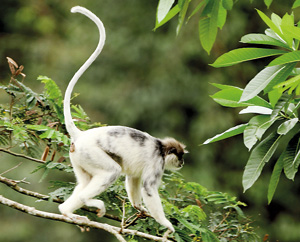
Snow whites that leap from tree to tree in the Sinharaja canopy

By Malaka Rodrigo

In his book The Natural History of Ceylon (1861), Sir Emerson Tennent says, “A white monkey, taken between Ambepussa and Kornegalle, where they are said to be numerous, was brought to me to Colombo. So striking was its whiteness that it might have been conjectured to be an albino, but for the circumstance that its eyes and face were black”.


Tennant also mentions that he has heard of White Monkeys from Ridi-galle Wihara in Seven Korles and in Tangalle. Robert Knox in “Seeing Ceylon’ written in 1681 too makes mention of them - “Milk-white both in body and face; but of this sort there is not plenty”.

Are they still there in Sinharaja and its environs?

This is the discovery that members of the Wildlife Conservation Society of Galle (WCSG) have reported during their recent research studies in the area. “Some of them have a completely white coat and it is like large snow balls falling from the sky when they leap from the canopy of large trees in Sinharaja,” said a researcher of the spectacular sightings of white monkeys in lesser explored areas of the rainforest a few months ago.

Albino or white monkeys are recorded intermittently, but researchers of the WCSG found 30 individuals who are either completely or partially white from 14 monkey troops they had studied in this area. All were recorded within an 18 km stretch in and around home gardens around Sinharaja.

Read Full Feature: http://www.sundaytimes.lk/110918/Plus/plus_08.html

Move to phase out HCFCs: Lanka ahead in safeguarding ozone layer


By Dhaneshi YATAWARA

In the late 1920s Thomas Midgley, an American mechanical engineer and chemist synthesized Chlorofluorocarbons which soon replaced the various toxic or explosive substances which were used then as refrigerants. Today the world has stopped using Chlorofluorocarbons (CFCs) as they are globally recognised as the main cause in depleting ozone layer. The entire world moved from Chlorofluorocarbons to Hydrochlorofluorocarbon in order to save the ozone layer which lies high above us in the sky protecting the earth dwellers from harmful radiation coming from the sun. Today the world is getting ready phase out Hydrochlorofluorocarbons (HCFCs) as it affects Climate Change though recognised as a low ozone depleting agent.

Read full feature: http://www.sundayobserver.lk/2011/09/18/fea13.asp

Wild elephant kills man

A man who had taken temporary shelter in a house in the Thihariya jungle died following a attacked by a wild elephant. The deceased was identified as U.M. Lebbe Mohamed, a resident of Pulmudde. The deceased body was handed over to his relatives after the inquest. (JJ)

http://www.sundayobserver.lk/2011/09/18/oostory.asp?sid=20110917_09&imid=wildelephant.jpg&dt=[September%2017%202011]

Boost for fishing industry

The Canadian International Development Agency (CIDA) - Food and Agriculture Organisation (FAO) funded US$ 4.9 million project to improve fish landing centres will be completed this month with the rehabilitation of 40 fish landing centres in 13 coastal districts including those in the recently liberated North and East.


The project also included building the new fisheries office in Mullaitivu; delivery of training and provision of equipment to strengthen the capacity of the Ceylon Fishery Harbours Corporation and Department of Fisheries and Aquatic Resources to support co-ordination of the rehabilitation and management of the landing sites; and delivery of training and equipment to promote community participation in fish landing site management.

The key achievements of the project include buildings and other facilities such as access roads, jetty, barge, ice storage, engine storage rooms, net mending areas, community halls, fish auction sheds and fish market stalls which have been built based on a comprehensive needs assessment to support fishing communities' livelihoods.

The project has run over a three-year period, executed by the Ministry of Fisheries and Aquatic Resources, implemented by the FAO in association with the Ceylon Fishery Harbours Corporation supported by the Department of Fisheries and Aquatic Resources. The project will be completed this month.

A workshop in this regard was held on September 8 and 9 in the presence of Secretary, Ministry of Fisheries and Aquatic Resources Development as the Chief Guest, officials of the Ministry of Fisheries and Aquatic Resources Development, the head of the Department of Fisheries and Aquatic Resources and Ceylon Fishery Harbours Corporation, officials from the FAO and representatives of the Canadian High Commission in Sri Lanka.

The project has supported the formulation of business plans to assist community organisations to raise adequate funds to meet the cost of operation and maintenance and to use surplus funds to uplift the socio-economic standards of the fishing population.

The objectives of the terminal workshop were to present the achievements and lessons learnt and to agree on an exit strategy for the project while ensuring community participation in sustainable management of the facilities provided.

It was agreed that there was the need to develop a national policy for development and management of fish landing centres through co-management principles involving the Department of Fisheries and Aquatic Resources, Ceylon Fishery Harbours Corporation and Fisheries Community Organisations.

http://www.sundayobserver.lk/2011/09/18/new20.asp

Making the Southern Expressway safe for motorists

by Ranil WIJAYAPALA

The Southern Expressway would be the first expressway to be added to the road network of Sri Lanka. The agencies involved in the project are adopting strict safety measures to guarantee a safer ride for the people, who are eagerly waiting to enjoy this novel experience on Sri Lankan soil once it is open to the public.

It is important to make the public aware of the operational aspects of the expressway before it is opened for road users as it would be the first of its kind in the country. The Road Development Authority (RDA), the key agency behind this mega project, is taking steps to make the relevant agencies aware of the operational and maintenance aspects of the expressway before deciding on the final operational arrangements of the project.

With this objective in mind, the RDA jointly with the Japan International Cooperation Agency organised a workshop on ‘Operation and Maintenance of the Southern Expressway’ in Colombo last week. It was attended by well-known professionals from road safety agencies, engineers and university professors who are closely observe the progress of the project.

Making a presentation on ‘Geometric Features and Facilities Available in the Southern Expressway’, Director of the Southern Transport Development Project, Engineer B.V.D.N. Chandrasiri said that the expressway with a length of 95.2 Km from Kottawa to Galle, will be commissioned soon and will be beneficial in reducing travel time and transport costs since it has been designed as an access control toll expressway.

The road can be accessed only from Kottawa, Kahathuduwa, Gelanigama, Dodangoda, Welipanna, Kurundugahahathakma, Baddegama and Pinnaduva to the Galle Port access road.

Once completed upto Matara, it could be accessed from Imaduwa, Kokmaduwa and Godagama as well.
The interchanges will be linked to other roads at the points mentioned below:

Kottawa – Colombo Ratnapura (A-4 ) Road
Kahathuduwa – Colombo Horana (B 084) Road
Gelanigama – Panadura Ratnapura (A-08 ) Road
Dodangoda – Nagoda Mathugama (B-304) Road
Welipenna – Horana Aluthgama (B157) Road
Kurundugahahathakma – Ambalangoda Elpitiya (B 014) Road
Baddegama – Hikkaduwa Baddegama (B 153) Road
Pinnaduwa – Galle Udugama (B 129) Road and
Galle Port Access road (B594) Road
Imaduwa – Galle Deniyaya Road
Kokmaduwa – Weligama Kananke Road
Godagama – Matara Akuressa Road

According to Engineer Chandrasiri, although the expressway has been designed for a speed of 120 KmPH, the actual maximum speed permitted would be 100 KmPH. Discussions are still on going whether to impose a minimum speed limit on expressway users to take maximum advantage of the expressway.

To ensure the safety of the motorists , a number of measures have been taken when designing the road. Accordingly, medium and side guard barriers, new jersey barriers, cyclone barriers and wire rope fences have been installed to prevent accidents on the road.

Row fences have also been installed on either side of the road to prevent animals entering the expressway. “Street lighting will be provided at interchanges, river bridges, overpass bridges and at underpasses,” Chandrasiri said.
Signboards

Making a presentation on ‘Traffic Signs and Expressway Markings’, Deputy Director of the RDA, R.A. Sudath said different signboards in large sizes with 200 metre legibility distance have been installed to direct motorists. Different warning signs and informative signs with details in all three languages have been installed to direct the motorists, he said.

Light motor coaches such as passenger vans with more than nine seats and all buses having more than 33 seats come under the group 2. Motor coaches such as buses with more than 33 seats, light motor lorries such as lorries and trucks having a GVW between 3,500 Kg and 1,700 Kg and motor lorries such as lorries and trucks having a GVW of more than 17,000 Kg come under Group 3.

He said an awareness program to educate the public and motorists will soon be launched by the RDA and other relevant agencies, making use of electronic and print media, so that they will be well educated about the use of the expressway.
Role of the Police

Senior Deputy Inspector General of Police-in-Charge of Traffic Management and Police Field Force Headquarters, Asoka Wijetilleka, told the Sunday Observer that safety consciousness and observance of road rules are a must when using the expressway once it is open to the public. “It is important for the safety of the motorists as well as passengers. It is also dangerous to have unroadworthy vehicles of the expressway, he said.

“This will lead to severe traffic snarls when there are breakdowns and also affect the safety of other motorists using the expressway. We have also seriously considered traffic restrictions only if and when there are emergency repairs to be done on the expressway,” the DIG explained.

The DIG said that the other component the Police have looked at is information sharing among the Police and firefighting units, hospitals and the media so that prompt announcements could be made to make the public aware of any danger, bad weather conditions and other severe blockades due to accidents so that others can keep reducing their speed levels to avoid another mishap,” he said.

“These are little things we have talked about. A gazette notification has already been published restricting certain vehicles using the expressway such as bicycles, motorcycles, motor tricycle, motor tricycles vans, hand vehicles and hand tractors”, he added.

“Heavy motor coaches, combination buses, heavy motor lorries and vehicles having four or more axles are permissible. However, we are seriously considering heavy motor coaches and lorries and having discussions with the RDA to seriously consider road worthiness tests at least every month for such heavy vehicles. Without such tests, it could be rather dangerous to have them on the expressway because in the event of a serious breakdown, the whole stretch of road will get affected”, he added.

“Through this Division we will be operating radio cars and motrocycle patrols which will be exclusively used for expressway duties. These duties will be on, 24 hours, seven days a week. We will be working on a shift basis, but 24-hour patrolling will be available by the Expressway Police Division,” he said.

The other significant factor is with regard to emergency units such as fire fighting units and para medics units. These two units in a unique situation in Sri Lanka first will be operated by the Police for first time.

“We are right now giving them training. Paramedics we have selected from the Special Task Force and fire fighting units are also under training now. Therefore this is a unique feature in the Police Department where, for the first time, we are getting involved in fire fighting,” he added.

According to him, this unit and the traffic control unit will initially be based at Gelanigama, Kurundugahahetekma and Pinnaduwa.“We have identified Kurundugahahetekma as the Expressway Police Division headquarters. The reason is, once the Expressway is completed upto Matara, this will be the central point between Matara and Kottawa,” he said.

”In addition to these, the RDA is also having teams to help and support us for patrolling, accident clearing and also identifying unroadworthy vehicles. We are also intending to have traffic communication and information centres by the RDA besides our own Police communications, which will link up Gelanigama, Kurundugahahetekma and Pinnaduva highway traffic police units.

“We will also be deploying Police units at each of the toll gates. This is to ensure that there will be no breach of peace at the tolls gates due to various arguments and situations and also to give protection for the toll money collected at the toll gates. This is a security feature we are looking at on the Expressway,” he added. The Expressway Police Division will be in the charge of a Senior Superintendent and in the Division office at Kurundugahahetekma. “We will have 25 Policemen at each of these units.

“For the entire Expressway, we will have over 350 Policemen for traffic and security. For paramedics and firefighting units we will have 108 personnel. Altogether there will be over 500 from the Police itself for expressway duties,” he said. The radio cars and patrol cars are especially designed for the expressway. So it is with the paramedics and firefighting units, he added.

According to RDA officials, many safety measures will be in place after the completion of initial discussions among relevant agencies to make the southern expressway a safer road for motorists.

http://www.sundayobserver.lk/2011/09/18/new18.asp

Inferior mobile phones, a potential danger

by Ananda KANNANGARA
Colombo University Senior Lecturer, Dr. Chandana Jayaratne warned the public to desist from using inferior mobile phones during thundershowers and lightning since there is a possibility of the phone battery exploding and causing serious injuries to the user as well as those nearby.

Mobile phone users should switch off their phones even during heavy showers and lightning as it could cause injuries to the user. Dr. Jayaratne told the Sunday Observer that not only people but also animals such as cattle, goats and elephants should be protected during lightning.

He said that cattle and elephants should be kept in safe places instead of tying them to trees as lightning strikes the top and goes to the root of the tree.

Children should refrain from playing in open areas during thundershowers and farmers in paddy fields, he said.

Dr. Jayaratne said 85 percent of the deaths due to lightning had occurred, in open places and most of the victims had been farmers engaged in agricultural work.

According to the Meteorological Department, lightning becomes active from March-May and October-November. Kalutara and Ratnapura districts were the worst affected areas. Two young boys of Anguruwatota in Kalutara and Akmeemana in Galle were struck by lightning in the evening last week. One boy died, while the other sustained minor injuries.

http://www.sundayobserver.lk/2011/09/18/new12.asp

ජීවිත දවන ‘සුදු බීඩි’ රටපුරා පැතිරෙයි

‘සුදු බීඩි’ නම් නීති විරෝධි දුම්කොළ නිෂ්පාදනයේ යෙදෙන ජාවාරම්කරුවන් පසුගිය වසර දෙකේදී රුපියල් මිලියන 400 සිට රුපියල් මිලියන 700 දක්වා වූ මුදලක් උපයා ගැනීමට සමත් ව සිටින බැව් අනාවරණය වෙයි.

අඩු ආදායම්ලාභීන් හා ග්‍රාමීය ජනතාව අතර මේ සුදු බීඩි උවදුර වේගයෙන් ව්‍යාප්ත වීමට එක් හේතුවක් වී ඇත්තේ එය මිලෙන් අඩුවීම බවත් වාර්තා වේ.

ඉතා බාල තත්ත්වයේ දුම්කොළ යොදා නිපදවන මේ සුදු බීඩි හේතුකොට ගෙන බරපතළ සෞඛ්‍යාබාධ හටගන්නා අතර දුම්පානය හේතුවෙන් පිළිකා, හෘදයාබාධ යනාදී මාරාන්තික රෝගයන්ට ගොදුරු වන සංඛ්‍යාව දිනෙන් දින ඉහළ යන බවත් සඳහන් වේ. සුදු බීඩි වෙළෙඳනාම 140 කින් වෙළෙඳපොළේ පවතින බවටත් තොරතුරු අනාවරණය වේ


http://www.silumina.lk/2011/09/18/_art.asp?fn=aa11091810

සිංහරාජය දැන් කාගේ උරුමයක්‌ ද!

ශ්‍රී ලංකාවේ සිතියමක්‌ ඇඳ එහි සිංහරාජ වනාන්තරය ඇඳ පෙන්වන්නැයි මෙරට බොහෝ දේශපාලනඥයන්ට, සංරක්‍ෂණයේ ඉහළ පුටු හොබවන්නන්ට හා හසරක්‌ නොදන්නා පත්තරකාරයන්ට පැවසුවහොත් ඔවුන් අන්දමන්ද වනු නිසැකය. ඒ සිංහරාජ වනාන්තරය තිබෙන තැනවත් ඔවුන් නොදන්නා නිසාය. ශ්‍රී ලංකාවේ සවිස්‌තරාත්මක සිතියමක්‌ ලබාදී සිංහරාජ වනාන්තරය පෙන්වන්නැයි මොවුන්ගෙන්ම යළිත් ඉල්ලා සිටියහොත් ඒ සඳහා කල් මරමින් සිතියම උඩු යටිකුරු කරමින් ඒ මේ අත බලනු නිසැකය. ඒ ඔවුන් සිංහරාජය තිබෙන තැන පමණක්‌ නොව එහි ප්‍රමාණයවත් නොදන්නා බැවිනි.


ශ්‍රී ලංකාවේ සමස්‌ථ භූමි ප්‍රමාණයෙන් 0.17% ක්‌ තරම් කුඩා හෙක්‌ටයාර් 11000 ක්‌ තරම් කෙටි භූමි ප්‍රමාණයකට සීමා වී පවතින සිංහරාජය, මෙ රටේ අන්තිම වැසි වනාන්තර අතළොස්‌සෙන් වැදගත්ම වනාන්තරය ලෙස දන්නෝ කීයෙන් කීදෙනාද? පෙර කී දේශපාලකයන් සංරක්‍ෂණයේ ඉහළ පුටු හොබවන ඇතැමුන් හා වෘත්තිය පිළිබඳ හසරක්‌ නොදන්නා පත්තරකාරයන් නම් මේ බව කිසිත් නොදන්නා බව පැහැදිලිය.

නැතිනම් සිංහරාජ වනාන්තරයට හානියක්‌ සිදුවන අයුරින් වනාන්තර පද්ධතිය මැදින් මාර්ගයක්‌ ඉදිකරන විට අඳ, ගොළු, බිහිරන් සේ බලා සිටින්නේවත් සංවර්ධනයේ නාමයෙන් සැඟවුණු න්‍යාය පත්‍ර මත දේශපාලුවන් විසින් මෙරට ජෛව සම්පත් හා අගනා වනාන්තර "කොටු රූල්" කරන විට ඒවාට එරෙහිව හඬ නඟන පරිසරවේදීන්ට, පාරිසරික මාධ්‍යවේදීන්ට NGO ලේබල් අලවන්නේවත් නැත.

මහා ලොකුවට සංරක්‍ෂණයක්‌ ගැන කතා කරන මෙරටේ අවම තරමින් සිංහරාජ වනාන්තරයවත් රැකගන්නට ක්‍රමවත් වැඩපිළිවෙළක්‌ රට තුළ නැති නම්, සිංහරාජ වැනි අගනා වැසි වනාන්තරයකට සිදුවන අබමල් රේණුවක තරමේ හානියක්‌ වළක්‌වන්නට මෙ රටේ රජයට හෝ සංරක්‍ෂණවේදීන් ට නොහැකි නම් හා නොදැනුවත්නම් "සංරක්‍ෂණය" නම් වදන භාවිතයෙන් ඉවත් කොට එය ඉබි යතුරුලා වළදමන ලෙස අප රජයට යෝජනා කර සිටින්නෙමු. මේ රටේ වන සංරක්‍ෂණය ගැන කතාකරන්නේ නම් පළමුව මේ අගනා සිංහරාජය සුරක්‍ෂිත වන පරිදි ඒ වටා ඇති ඉඩම් ප්‍රතිසංස්‌කරණ කොමිසම සතු පවරා ගැනීමට නියමිත සියලු ඉඩම් පවරා ගනිමින් මේ වනාන්තරය සවිමත්ව ස්‌ථාපිත කළ යුතුය යන්න ද අපි අවධාරණය කරමු.

එහෙත් ඒ වෙනුවට සිංහරාජය පමණක්‌ නොව කන්නෙලිය, නකල්ස්‌ වැනි වනාන්තරවල සංවේදී කලාපයේ ඇති ඉඩම් ප්‍රතිසංස්‌කරණ කොමිසම සතු ඉඩම් දිනෙන් දින දේශපාලන හිතවතුන්ට ලබාදෙන බව දැන් පැහැදිලි වී ඇත. නැතහොත් සංවර්ධනයේ නාමයෙන් පාරවල් තනා එම ඉඩම්වලට තව තවත් වටිනාකම් සපයා දෙනු පෙනෙන්නේ තවත් නොබෝ දිනකින් මෙම ඉඩම් සඳහා ආයෝජන අවස්‌ථා ගෙන ඒමේ අරමුණින් බව පැහැදිලිය. කලවාන ආසනයේ ඉළුඹකන්දත් - කොළොන්න ආසනයේ සූරියකන්දත් යාකෙරෙමින් ඉදිකිරීමට යෝජිත හා දැනටමත් පරිසර නීති උල්ලංඝනය කරමින් අනවසරයෙන් කිලෝමීටර් තුනක්‌ පමණ දක්‌වා ඉදිකර ඇති මාර්ගයත් අපට හඳුන්වන්නට සිදුවන්නේ මෙසේ සිංහරාජ වනාන්තරයට පවරා ගැනීමට නියමිත ඉඩම් සඳහා අගය වැඩි කිරීමේ (ඪ්කමැ aded) ක්‍රියාදාමයක්‌ ලෙසය. ඒ නැතිව සූරියකන්ද දක්‌වා තවත් ප්‍රවේශ මාර්ගයක්‌ තැනීමේ කිසිදු අවශ්‍යතාවක්‌ නැත.

සූරියකන්ද නම් කඩමණ්‌ඩිය දක්‌වා ඇඹිලිපිටිය - පණාමුරේ ඔස්‌සේද, මාදම්පේ - රක්‌වාන ඔස්‌සේද, දෙණියායේ සිටද ප්‍රධාන මාර්ග තුනක්‌ ඇත. එවන් විටෙක වනාන්තරයක්‌ මැදින් කිලෝමීටර් හතක පමණ වනාන්තර හා පාරිසරික සම්පත් විනාශ කරමින් රුපියල් ලක්‍ෂ 65 ක වියදමෙන් මාර්ගයක්‌ ඉදිකිරීම කාගේ අවශ්‍යතාව මත සිදුවන්නක්‌ද යන්න මේ රටේ ජනතාව දැනගත යුතු කාරණයකි. රටේ බොහෝ ප්‍රදේශවල නව මාර්ග ඉදිකිරීමත්, මාර්ග රැසක්‌ ප්‍රතිසංස්‌කරණය කිරීම සඳහාත් ඕනෑතරම් අවශ්‍යතා තිබියදී එම ප්‍රමුඛතාවන් සඳහා කටයුතු නොකර සිංහරාජය බඳු අගනා වනාන්තරයක්‌ දෙකඩ වන අයුරින් මාර්ගයක්‌ ඉදිකරනු පිණිස මහා මාර්ග අමාත්‍යාංශය රුපියල් ලක්‍ෂ 65 ක්‌ වැය කිරීම අදහාගත නොහැකි දෙයකි. පාරිසරික අමාත්‍යාංශය හා වන සංරක්‍ෂණ දෙපාර්තමේන්තුවත් විශේෂයෙන්ම මධ්‍යම පරිසර අධිකාරිය මෙවන් සංවේදී පාරිසරික ප්‍රශ්න කෙරෙහි දක්‌වන අඳ ගොළු බිහිරි ප්‍රතිපත්තිය ද මෙහිදී මහත් ගැටලුවකි. නොහොත් සංරක්‍ෂණය පිළිබඳ ඔවුන් ගසන පම්පෝරියේ රෙදි ගැලවී තමන් නිරුවත් වී ඇති අයුරුවත් ඔවුන් නොදන්නා බව මේ සිදුවීම් ඔස්‌සේ පැහැදිලි වේ.

ඉළුඔකන්ද සිට සූරියකන්ද දක්‌වා ඉදිකරමින් පවතින වනගත මාර්ගය කිසිලෙසකින්වත් ඉදිවිය නොවිය යුතු මාර්ගයක්‌ ලෙස අපි දකින්නෙමු. එහෙත් ඉළුඔකන්ද හා ආශ්‍රිත ගම්මානවල ගම්වැසියන්ගේ පොදු (මාර්ග) පහසුකම් දියුණු නොකරන්නැයි ද එයින් අපි කිසිවිටෙකත් අදහස්‌ නොකරමු. ලියුම්කරු සොයා පැමිණි ඉළුඔකන්දේ සංඝයාවහන්සේලාටද මේ බව අප අවධාරණය කර සිටියෙමු. එහෙත් ඉළුඔකන්දේ හෝ සූරියකන්දේ ඉඩම්වල අගය වැඩිකර ඒවාට ආයෝජන අවස්‌ථා ගෙන ඒමේදී ඒ අවට ගම්මානවාසීන් වන ඔබගේ ඉඩම්ද තුට්‌ටු දෙකට ගෙන ඔබේ උරුමය සිංහරාජය අවටින් පළවාහරින්නට උත්සාහ දරන දේශපාලකයන්ගෙන් ප්‍රවේශම් වන්න යෑයි අපි ඉළුඔකන්ද ආශ්‍රිත ජනතාවට සිහිපත් කර සිටින්නට කැමැතිය. ඒ සඳහා දුම්බර වනාන්තරය අපට කදිම නිදසුන් සපයයි. අද ඒ අවට ගම්මාන වැසියන්ගේ ඉඩම් තුට්‌ටු දෙකට ගෙන මහා හෝටල්, අවන්හල්, නිවාඩු නිකේතන ඉදිවෙමින් පවතී. මේවා පසුපසද සිටින්නේ බලවත් දේශපාලකයින්ය. එබැවින් පළමුව තමන්ගේ උරුමය රැකගන්නැයි අපි ඒ ආශ්‍රිත ජනතාවගෙන් ඉල්ලා සිටින අතර අප මේ හඬනගන්නේ ජාතියේම උරුමය වන ජාතික උරුම වනාන්තර භූමි පනතින් ආරක්‍ෂිත මේ රටේ එකම වනාන්තරය වන හා ලෝක උරුම වනාන්තරයක්‌ වන සිංහරාජය නමැති සොච්චම් බිම්කඩ රැකගැනීම සඳහා බවත් අවධාරණය කරන්නට කැමිතිය.

සිංහරාජ වනාන්තරයේ ජෛව විවිධත්ව අගය හා වටිනාකම් පිළිබඳ අප මේ ලිපියෙන් විග්‍රහ කරන්නට බලාපොරොත්තු වන්නේ නැත. ඒ පිළිබඳ ඇති තරම් ලිපි පසුගිය දිනවල පුවත්පත්වල පළවිය. එහෙත්, ජලපෝෂණ වටිනාකම අතින් හා වනාන්තර වියනක්‌ ලෙස සිංහරාජයෙන් රටට ලැබෙන ප්‍රයෝජනයත් මේ රටේ ජනතාව, විශේෂයෙන්ම හසරක්‌ නොදන්නා දේශපාලුවන් ඇතුළු පිරිස දැනගෙන සිටීම ඉතා වැදගත්ය.

අප සිංහරාජ ලෝක උරුම වනාන්තරයේ ප්‍රමාණය හෙක්‌ටයාර් 11000 ක්‌ තරම් යෑයි කීවද එහි ඇති සැබෑ නොඉඳුල් වනාන්තර ප්‍රමාණය වන්නේ හෙක්‌ටයාර් හත්දහසකට (සියයට 60) ආසන්න ප්‍රමාණයකි. ඉතිරියෙන් බහුතරය දැව හෙලීම්වලින් පසු වැඩුණු ද්විතීක වනාන්තරයයි. ඉතිරි කොටස කැකිල්ල හා පර්ණාංග වලින් සමන්විත ලඳු කැලෑවයි. එහෙත් වැසි වනාන්තරයක්‌ ලෙස මෙමගින් පෝෂණය වන ප්‍රධාන ජල ධාරා රැසක්‌ අද දකුණුලක ජනයාගේ පිපාසාව සංසිඳවීම ඇතුළු අනෙකුත් ජල අවශ්‍යතා සපුරාලයි. ශ්‍රී ලංකා සිතියමක්‌ පරීක්‍ෂා කර බලන විට මෙතරම් සේවයක්‌ සපයන සිංහරාජය මොනතරම් සම්පීඩනයකට ලක්‌ව, කෙතරම් ජනාකීර්ණ ගම්මාන රැසකට මැදිව පවතින හුදෙකලා "දූපතක්‌" ද යන්න ඔබට පැහැදිලි වනු ඇත. මෙවන් වනාන්තරයකට පෙර කිව් පරිදි අබමල් රේණුවක තරමේ බලපෑමක්‌ සිදුකළ ද විය හැකි විනාශය අති මහත්ය. එවන් විටෙක මොනතරම් ක්‍රියාමාර්ග මෙම වනාන්තරයේ ආරක්‍ෂාව වෙනුවෙන් ගත යුතුව ඇත්තේද? මධ්‍යම රජයේ වන සංරක්‍ෂණ දෙපාර්තමේන්තුව මගින් මේ අනුව ගෙන ඇති සංරක්‍ෂණ ක්‍රියාදාම මෙන්ම පවතින නීතිරීති ද බොහෝ දුරට ප්‍රමාණවත්ය. එහෙත් එහි වගකීම දකුණු හා සබරගමු පළාත් සභාවලටද සිංහරාජය වටා ඇති සියලුම ප්‍රාදේශීය සභාවලින් නොනැවතී ග්‍රාම නිලධාරී කොට්‌ඨාශ දක්‌වා පැතිර යයි. එවන් සංරක්‍ෂණ අවශ්‍යතාවක්‌ තිබියදී ඉළුඹකන්ද සිට සූරියකන්ද දක්‌වා මාර්ගයක්‌ ඉදිකිරීමට යෝජනා කළ හා එය කැඩීමට ක්‍රියාත්මක වූ කොළොන්නේ හා කළවානේ රජයට සම්බන්ධ ආසන සංවිධායකවරු ඇතුළු පිරිසට එම වටිනාකම නොතේරෙන්නේවත් එම වගකීම නොමැත්තේවත් ඇයි ද යන්න අපට ප්‍රශ්න කිරීමට සිදුවේ. මෙවන් වනාන්තරයක්‌ සුරක්‍ෂිත කිරීමට දායකත්වය ලබාදී සිංහරාජ වනාන්තරයේ ආරක්‍ෂාවත් එහි ස්‌ථාවරත්වයත් සඳහා ඉඩම් ප්‍රතිසංස්‌කරණ කොමිසම සතු ඉඩම් වහා රජයට පවරා ගැන්නට බලකර ඒ උතුම් සද්කාර්යයට දායක වූයේ නම් ප්‍රදේශවාසීන් වශයෙන් මේ දේශපාලකයන්ට හා ඊට සම්බන්ධ නිලධාරීන්ට "යන තැනකටවත්" වැඩක්‌ කරගන්නට ඉඩ සැලසේ. නැතහොත් තමාගේ දූ දරුවන් ඇතුළු මෙරටේ අනාගත දූ දරු පරම්පරාව වෙනුවෙන් උතුම් කාර්යයක්‌ සිදුකළේය යනුවෙන් සැනසුම් සුසුම් හෙළන්නට හැකියාව තිබිණි. ඒ නැතිව සොබාදහම පවා කම්පා කරමින් ලෝක ගෝලීය ඒකාග්‍රතාවට පවා බලපෑම් කරමින් මේ නොඉඳුල් වනාන්තරයේ අතු කැබැල්ලක්‌ හෝ කඩා දැමීමේ පාපයෙන් ඔවුන් මේ සමස්‌ථ මිහිමවටම සිදුකරනුයේ බලවත් නොපනත්කමකි.

කෙසේ හෝ දැනටමත් යුනෙස්‌කෝ සංවිධානය පවා ලෝක උරුම සිංහරාජයට බලපෑම් කරමින් සිදුවන මෙවන් සංවර්ධන කටයුතු පිළිබඳ ලක්‌ රජයෙන් විමසීම් කර ඇති බව දැනගන්නට ලැබේ. පරිසර අමාත්‍යවරයාද නිවේදනයක්‌ නිකුත් කරමින් කියා සිටින්නේ වනාන්තරයට බලපෑමක්‌ සිදුවන මෙම නව මාර්ගය සැකසීම වහාම අත්හිටුවීම සඳහා තමන් නියෝග නිකුත් කළ බවයි.

ජගත් කණහැරආරච්චි

http://www.divaina.com/2011/09/18/feature16.html

Saturday, September 17, 2011

GMSL Press Release: Court Order on the road through Sinharaja Forest (2011-09-16)

මාධ්‍ය නිවේදනය: සිංහරාජය හරහා ඉදිවන මාර්ගයට එරෙහිව පනවන ලද අධිකරණ නියෝගය සම්බන්ධයෙනි (2011-09-16)