Sunday, November 27, 2011

Saving our whales as well as watching our whales

On an excursion off Mirissa with John Keells Nature Trails, Shaveen Jeewandara experiences the thrills and spills

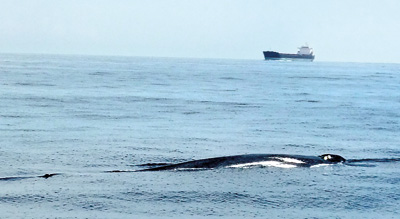
Our eyes are fixed on the far horizon. The sun’s rays illuminate the seascape. ‘Whale.. Blue Whale!’ a cry is let out from the boat. All eyes turn to the person who made the call and then follow his finger towards the distance. Suddenly the magnificent creature surfaces. The sight itself is overwhelming. The Blue Whale (Balaenoptera musculus), the largest animal on earth shows itself for just about minute, before disappearing into the depths of the sea.

The Blue Whales are seen in three locations off the coast of Lanka–Mirissa, Kalpitiya and Trincomalee. Mirissa being the prime spot out of the three, sandwiched between the towns of Weligama and Matara, is a 35 km or one hour drive south of Galle by bus. The whale watching season is just beginning as the Sunday Times joins a John Keells expedition on board a 20-seater power boat off Mirissa.

“Passion is what drives me on this whale quest,” says Nilantha Kodituwakku, naturalist at John Keells Nature Trails who has worked alongside Chitral Jayatilaka – Head of Eco-Tourism and Special Projects at John Keells to promote the operation. Having been inspired by the wildlife and backyard jungle treks of Polonnaruwa, where he grew up, Nilantha has ever since been in love with nature.
“I don’t believe that whales are here for the season, I believe that they are resident creatures,” adds Nilantha. ”Of course the start of the season signifies the best weather conditions to see whales, and has yielded high success rates,” he adds, as the sun glistens across a sky that now beams clear blue.
‘John Keells Nature Trails’ have been pioneers in the industry and are known to have the safety of the passengers and the whales uppermost.


The official season kicked off early November with a few boats going out to sea, in search of luck in its big blue form. At the entrance to the John Keells office at the Mirissa fishery harbour a whiteboard with dated entries lets us know that the last few outings have indeed yielded good results – with sightings of up to a dozen Blue and Sperm whales, and a staggering 300 Spinner Dolphins (Stenella longirostris), on a particular outing.

Nilantha pulls out a sea chart to pinpoint the locations we’ll be heading to. The sea chart reveals the extraordinary fact that there is a high density of whales between the first and second international shipping lanes. “The whales are not deterred by the ships though the reason still remains a mystery,” says Nilantha. As though to solely prove his point, a magnificent Blue surfaces and does a trademark dive as an oil tanker steams past in the distance.

The Mirissa sea is unique in many ways, being upto 300 metres deep within close vicinity to the shore, the continental shelf being very narrow here. This specialty is what makes these waters well-suited for marine mammal watching. The success rate of spotting Blue whales is almost 100%, with Sperm whales, Risso’s and Spinner dolphins showing themselves along the way.

Along with John Keells, Mirissa Water Sports was one of the first in the industry. With a modest beginning of very few boats – three to be precise, they currently have 15 boats in operation. But these apart, unregulated boating has been a reason for worry, with a large number of fishermen-cum-whale watchers emerging from the region. The thirst for quick money has lured them into this enterprise. With their owners having little knowledge, these boats pose a threat to the long term viability of the industry. “The balance in the industry depends on proper regulation,” says Nilantha. “We know the regulations, we don’t chase the whales, we don’t separate the pack and we certainly don’t encroach on their personal space.”

Such practices were evidently lacking in some of the small boats that took to sea. On one instance a small boat laden with foreign tourists ventured so close to a whale that it was literally on top of the creature. The whale obviously showing signs of panic, vanished out of sight.

NARA chairman Hiran Jayewardene, speaking to the Sunday Times says that regulations are long overdue, although there have been discussions between the Department of Wildlife Conservation, Tourist Board and NARA. Dr. Jayewardene points out that regional co-operation on this matter is being sought. “We are presently working with the Centre for Research on Indian Ocean Marine Mammals (CRIOMM), and the Indian Ocean Maritime Affairs Co-operation (IOMAC), to adopt a common approach and a dedicated Marine Mammal Management Act.”

Just as a Blue whale is spotted by Nilantha, our boat slowly approaches from the rear, making sure the 100m distance is kept. The Blue acknowledges our restraint by remaining on the surface for a prolonged period before treating us to another breathtaking tail fluke. Four giant leviathans are sighted, before we head back, only to be greeted with the pleasant surprise of close to a hundred Spinner dolphins, as one chirpy dolphin rose from the water spinning upwards – justifying its name. Spectacular would be an understatement for these sights.

Enjoying the spectacle, tourists Farida and Francis Gueroult from France, tell us that whale watching is what attracted them to the Southern coast. Francis says travelling has been their pastime for the last couple of years. “Sri Lanka is one of our top destinations, because of its ecology and its smiles,” beams Farida.

“This industry should not be abandoned, however small boats should not be allowed to close in on the whales,” they say. Being one of the first to literally point a finger at the rowdy boatmen, Farida reiterates that the tourists should be the first to tell the local boatmen not to disturb the whales – solely to please them.

Another stakeholder is the Sri Lanka Navy who recently launched their very own whale watching expeditions headed by Commander Kosala Wijesooriya. Their boat – the A543 had seen active service in Eastern waters. “We have decided to come into the industry as there was a lack of methodical operations,” says Commander Wijesooriya, explaining that the Navy aspired solely to provide a boost to the industry.

“Sri Lanka has not even touched its potential in becoming a whale watching hotspot,” he claims. The Navy currently has no affiliated naturalist but is keen to take down methodical notes of sightings and log them for future use. “Once the industry blooms, we’ll not continue the enterprise, as the Navy is entrusted with other operations of prime importance,” Commander Wijesooriya says.

The whale watching industry is on a tight-rope, struggling to find the balance between conservation, regulation and national economic gain. To strike this intimate balance is what authorities and conservationists must work towards if it is to be a sustainable and beneficial effort both for tourism in Sri Lanka and the majestic marine mammals that seek our waters.

Keells Nature trails

A three- hour excursion with John Keells Nature Trails costs Rs 7000 per person, and reservations can be made from the John Keells Head Office, Colombo 2, or at the Chaaya Tranz Hotel Hikkaduwa.
Contact 0715322322 or visit www.facebook.com/#!/naturetrailslanka for more details.

http://www.sundaytimes.lk/111127/Plus/plus_08.html

‘Missing’ bat, not quite missing

The rare Pouch Bearing Sheathed Tailed bat has made a re-appearance after last being recorded here in 1936.

Shaveen Jeewandara reports on this exciting discovery

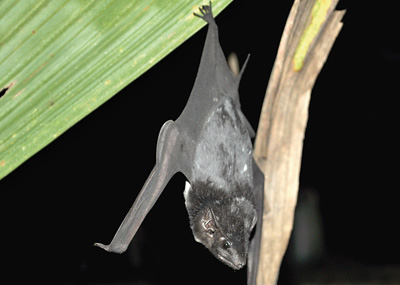
Last seen in 1936, the mysterious Pouch Bearing Sheathed Tailed Bat has made a comeback – after 75 years. Recently sighted by researchers Ranil Nanayakkara and Nilantha Vishvanath, the discovery of the bat that was ‘missing’ has excited wildlife enthusiasts.

The Pouch Bearing Sheathed Tailed bat, bearing the scientific name Saccolaimus Saccolaimus, was listed as globally threatened by the IUCN Redlist, and the Biodiversity Secretariat. Globally, efforts have been put in place to bolster populations of these species but the difficulties in spotting and carrying out research have hindered conservation efforts. Being an insectivorous species, these bat populations have been threatened by the use of pesticides.


Ranil and Vishvanath discovered the species roosting in the hollow of a coconut tree, at Yatawehera estate, Kurunegala. The roosting site was about 8-10 feet from the ground and there were four male bats occupying the hollow. The specimens were captured to get the necessary measurements essential for identification, before they were released back to the roosting site.

“It was quite a thrill to see this species,” says Ranil. “The Pouched Sheathed Tailed Bat is extremely rare, as the deficit of information for 75 years suggests, but it is also one of the most unique, having features that sets it apart. They are highly intelligent and have complex social structures. You have to be out in the field to know this.”

Major. W.W.A. Phillips – the pioneer of small mammal research in Sri Lanka had mentioned this particular species, but a clear detail was not possible due to lack of sightings. The species was last recorded in 1936 in Cheddikulam, by E.C. Fernando of the National Museum of Sri Lanka.

Saccolaimus saccolaimus is one of the three species of sheathed tailed bats found in Sri Lanka which belongs to a family with the unique feature of tails protruding from the interfemoral membrane (the membrane that extends between the inner margins of the legs of bats).

This is a medium-sized insectivorous bat that uses echolocation to find its way in the darkness and capture its prey. Its coat is generally dark brown to almost black mixed with whitish hairs giving a mottled appearance with the face and wings being almost black.

It can be distinguished from others of its genus having long wings, and the presence of a gular sac beneath the chin along with the very dark colouring. The other distinguishing feature of this bat is the lack of a radio metacarpal pouch (a pocket on the ventral side of the wing found in some bats) on the wing, whereas it is prominent in the other two species found on the island

Their echo-location capabilities are unparalleled, states Ranil. “They could detect an object as thin as a strand of hair from several hundred metres away, a feat that cannot even be matched by the latest radar technologies.” The saccolaimus saccolaimus is roughly about 12 cm in length. Apparently their miniature size has also been a barrier for sighting.

They fly at great speed outstripping all other bats in Sri Lanka and with their long narrow, pointed wings they might be almost mistaken for some kind of swift. As they fly they generally herald their approach by loud high pitched squeaking cries.

Driven purely by their passion for wildlife and the thirst for knowledge, Ranil who is currently doing his thesis carries out extensive research along with Nilantha This rediscovery has resulted from an island-wide survey currently being conducted by Biodiversity Education and Research (BEAR) on lesser known mammals.

http://www.sundaytimes.lk/111127/Plus/plus_05.html

Pilgrims play dangerous game in tempting Sithulpawwa Tusker

Not a week passes without a report of the animal community being threatened in one way or another by humans who should know better. Last week, the Sunday Times reported on the problem of over-exposure of wildlife sanctuaries to tourists, local and foreign. The increasingly intrusive presence of humans in designated wildlife reserves is a cause for serious concern among wildlife lovers and protectors.

The ancient Sithulpawwa Rock Temple found within the Yala National Park is a popular site with Buddhist pilgrims. The area is also home to a majestic tusker. Admiring a tusker from a safe distance is one thing; offering the animal food is another, and a dangerous one.

The Sithupawwa tusker has become accustomed to taking food from visitors, and even comes within touching distance to accept hand-held food. Wildlife experts say the visitors are taking a huge risk because animals behaviour in the wild is not predictable.

Wildlife photographer Aruna Seneviratne, who has taken photographs of the tusker, told the Sunday Times that the monks at the temple have been compelled to use a loud-speaker to warn people not to feed the wild elephant. However, pilgrims continue to stand near the railing surrounding the temple and throw food for the tusker.

It was an ancient religious practice to offer food to wild animals, in the belief that doing so conferred merit on the giver. Rukshan Jayawardena is a conservationist and a wildlife photographer. According to Mr. Jayawardene, elephants come to humans if they are encouraged, and not because they cannot find food on their own in the jungle. He says animals can make a habit of coming in search of food wherever humans are gathered. It has been reported that this same tusker and other wild jumbos out foraging call at bungalows within the game park.

Less than a week ago, another young tusker, nicknamed Gemunu, tried to enter a wildlife bungalow in Buttuwa, Yala. The animal has been regularly treated to snacks by safari teams, and has developed a taste for cooked food.

Some time back, the same young tusker invaded the kitchen of a Yala hotel, and got out only after a great deal of thrashing about that caused much damage to the property. The hotel has had to enforce a “strictly no feeding” policy among its guests. Sadly, while coming closer to humans through human encouragement, these wild jumbos could be digging their own grave. Several jumbos that became over-familiar with humans and were eventually tagged as “dangerous pests,” have had to be eliminated.

Elephant conservationist Lal Anthonis recalled how a wild elephant broke into his bungalow in Mahaseelawe at about two in the morning. The animal had picked up a food cabinet placed on the veranda and flung it into the garden and proceeded to smash it open.

After talking to the former chief incumbent of the Sithulpawwa Temple, Mr. Anthonis was convinced that this was another elephant that had acquired a taste for food available through human agents, and that it had probably learnt the “bad habit” at the Sithulpawwa Temple.

Not long after, the animal was shot dead when it entered an Army Camp near the reserve and tried to smash its way into a bunker. It is also rumoured that leopards too are being tempted with food at camp sites. Visitors throw food in the hope that they will get a better view of the predators.

http://www.sundaytimes.lk/111127/News/nws_26.html

‘Female’ tusker report to be verified before news can be trumpeted

By Malaka Rodrigo

The “hot” news in the wildlife circuit last week was that a female tusker had been spotted in the Yala National Park. Only male Asian elephants have tusks, and only a small percentage of male Asian elephants have tusks. So the reported sighting of a “female elephant with tusks” has naturally caused a stir, sparking debate among wildlife experts and even prompting search parties to go in pursuit of the unlikely creature. The idea of a young “female tusker” becomes especially intriguing among those who want to believe it exists.

Dr. Vijitha Perera, Wildlife Veterinarian Surgeon for the Southern Region, told the Sunday Times that field officers at Yala claimed to have seen what they assumed to be a “female” tusker, which showed no visible sign of male genitalia when it was passing urine.

According to Dr. Perera, it can be difficult to tell the sex of a young elephant that has not fully sexually matured. The tusker in question is believed to be about six years. In fact, this very difficulty makes it a challenge to determine the male:female ratio of the elephant population in a wildlife census.

Elephant tusks are elongated, continuously growing front teeth. Some male elephants and female elephants can have what are known as “tushes”, which is a small short tusk with no pulp inside. Tusks remain short, and are easily identified. Both sexes of the African elephants can have tusks, while only a minority of male of Asian elephants bears tusks.

Wildlife Department Director H. D. Ratnayake told the Sunday Times that a team headed by veteran elephant researcher, Professor Charles Santhiapillai, is to visit the game reserve to have a look at the elephant in question.

http://www.sundaytimes.lk/111127/News/nws_25.html

Somawathiya saved (2 items)

Banana farm on national park land dismantled: A win for conservationists

By Malaka Rodrigo

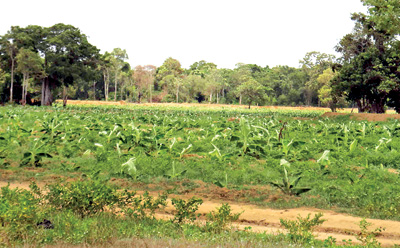
The Dole Lanka banana farm that was set up on land belonging to the Somawathiya National Park (SNP), has been dismantled. According to sources, farm machinery has been removed, and young banana trees cleared from a 500 acre area on the east bank of the Mahaweli River. The farm had extended outside the Kandakaduwa Farm area leased to the company.

The Somawathie National Park covers land drained by the Mahaweli, in the North Central and Eastern Provinces. The decision by owners Dole Lanka Pvt Ltd to shut down the farm marks a victory for conservationists, who had lobbied intensely to have the land cleared of illegal encroachment. The farm came to public notice when environment organisations, supported by the media, including the Sunday Times, highlighted the encroachment.

Young banana plants that have now been removed by the The Dole Lanka banana farm Company

While the Department of Wildlife Conservation (DWC) and the Ministry of Agrarian Services and Wildlife maintained that park land had not been encroached upon, activists and conservationists produced World Wildlife Fund (WWF) satellite images to prove that the disputed area occupied by the banana farm did indeed extend into the national park.

“We are extremely pleased with the turn of events and the prompt manner in which Dole has acted in this instance, which we trust will serve as an example to other organisations that are presented with evidence of infringements in law governing public assets,” said Wardani Karunaratne of Environmental Foundation Limited (EFL).

EFL had lobbied directly with Dole Food Inc. EFL is affiliated to the Wildlife and Nature protection Society (WNPS); Wilderness Area Protection Foundation (WAPF), and other conservationist groups. All were concerned about the unauthorised clearing of forest land within the national park.

In September, EFL and other conservationists had met a Dole Asia representative and presented their case. After conducting its own investigation, Dole Asia acknowledged that the cultivated area was within park premises. On November 16, Dole Asia confirmed that all banana farm operations had been withdrawn from the area.

According to environmentalist Sajeewa Chamikara, the farm should be outside the one-mile buffer zone around the Somawathie National Park. This is a legal requirement, under the Flora and Fauna Ordinance.

While praising the Dole Food Company for showing responsibility and responding accordingly, Mr. Chamikara said there was a danger that other commercial interests may be eyeing the abandoned lands, and that vigilance was required.

The conservation community of Sri Lanka has appealed to all investors to first conduct studies on the legality and environmental sustainability of any business moves that involved use of land around the country, especially forest land.

http://www.sundaytimes.lk/111127/News/nws_17.html


Environmentalists Score At Somawathiya

By Nirmala Kannangara


Aerial photo shows the deforestation within Somawathiya, Gazette notification of September 2, 1986 declaring Somawathiya as a national park and Pramodya Wickremasinghe planting the first banana sapling

Following the exposure in our August 14, 2011 issue on how the Defence Ministry has given away lands from the Somawathiya National Park (SNP) to the local agents of USA based Dole Food Company – Letsgrow (Pvt) Ltd for fruit and vegetable cultivation and livestock farming, the Environmental Foundation Limited (EFL) a non-governmental environmental conservation organisation has forced Dole Food Company to get their local agent to move out of SNP immediately.

Former Sri Lankan fast bowler Pramodya Wickremasinghe, Muthiah Sasidaran, brother of former Sri Lankan spin bowler Muthiah Muralitharan and Sarath Wickremaratne are the partners of Letsgrow (Pvt) Ltd.
Speculation is rife whether 11, 600 acres of state land was given to Letsgrow (Pvt) Ltd. by the Defence Ministry as an incentive to Pramodya Wickremasinghe to cross over from the UNP to the ruling party in the run up to the presidential election in 2010. For causing irreversible damage to the SNP, EFL was forced to explore possible legal action against those who were involved in this project.

Subsequent to this move, representatives from Dole Food (Asia) headed by Senior Vice President Human Resources Jennifer Wiegleb arrived in Sri Lanka and held discussions on September 25 and October 28 with the EFL, Wildlife and Nature Protection Society (WNPS) and Wilderness Area Protection Foundation (WAPF) and then promised to move out from SNP. Speaking to The Sunday Leader, Head of Legal EFL Wardani Karunaratne said that they have requested Dole Food Company to withdraw their plantation from the SNP failing which legal action would be initiated for causing irreversible damage to the national park.
“When we made a presentation on the status of the illegal clearance within the sanctuary through satellite images, Dole representatives wanted one month to withdraw from SNP. At the October 28 meeting Dole acknowledged that part of their fruit plantation was within the SNP and requested two more weeks to move out,” said Karunaratne. According to Karunaratne, national reserves are governed by the Fauna and Flora Protection Ordinance (FFPO) No: 2 of 1937 (as amended) and the second highest level of protection is afforded to national parks- the category which SNP falls under.

“Hence under Section 5 of the FFPO (as amended) no person is permitted to enter and remain within a national park without the permission of the Department of Wild Life Conservation (DWLC). Section 5 (2) provides that such permission could be issued only for the purpose of studying or observing the fauna and flora in a national park. Further Section 6 of the FFPO (as amended) says that no person can damage or destroy any plant or clear the park for any development activity inside a national park which is a non bailable offence,” said Karunaratne. Meanwhile, Director Environment Conservation Trust Sajeewa Chamikara queried as to how the Defence Ministry allowed Letsgrow (Pvt) Ltd. to trespass on SNP.

“Somawathiya was first declared a sanctuary through Gazette notification no: 147/12 of September 9, 1966, under the Fauna and Flora Protection Act and was later declared as a national park in 1986 by Gazette notification no: 417/5 of September 2, 1986. This 93,662 acre National Park and the adjoining National Livestock Development Board (NLDB) lands which is thick jungle was the habitat for more than 500 wild elephants. It was the Mahaweli riparian area that provided the best food for them. With the clearing of the jungle not only the fauna and flora that is endemic to Sri Lanka has faced a great threat but it has become the start for yet another human-elephant conflict,” said Chamikara.

According to Chamikara, army posts have been installed right round the project land and neither the NLDB nor the Department of Wild Life Conservation (DWLC) officials were allowed to enter this ‘cultivation site’ to carry out land surveys.

“When the DWLC and the NLDB officials wanted to survey the land in order to find out to which department this land belongs to, the army prevented them. If they have not violated any laws why do they refuse to let these officials in,” alleged Chamikara.

According to him, it is strictly prohibited to develop a national park or its reservations but added that over 50 acres from any other forest land which is not a national park nor a reserve could be developed with the approval of the WLCD, the Forest Department, Agrarian Services Department, Irrigation Department, Archeological Department and the respective District and Divisional Secretaries as per the State Land Ordinance.

“If it is above 50 acres of forest land, approval should be taken from the said authorities while if it is a land which is within a one kilometre radius from the buffer zone an Environment Impact Assessment (EIA) has to be carried out,” Chamikara said. However, according to Karunaratne, it was with the support of the World Wildlife Fund (WWF) that they obtained past and present satellite images of the plantation site and to ascertain the exact location where the devastation has been carried out. “Since the army did not allow the DWLC, the NLDB or any other party to enter the area for a land survey, we had to seek the support of the WWF to get past and present satellite images to find out exactly where Letsgrow has cleared the thick jungle. The satellite images clearly show that the clearing has taken place between the Mahaweli river and the Kandakadu stream. Although the army claims that this plantation is carried out on the Kandakadu farm which belonged to the NLDB, how can they claim that when part of the Kandakadu farm too falls within the SNP?” claimed Karunaratne.

According to him, Dole representatives have confirmed to the EFL of their withdrawal from the SNP at a meeting held on November 16. “We were told that they have removed all their belongings within the SNP. However, we have to carry out an independent verification to confirm this and to see whether they continue their plantation within the buffer zone which too is a strictly prohibited area for any development activity,” said Karunaratne.

Although Dole has acknowledged that part of the plantation was within SNP, it was surprising to note that neither the Sri Lanka Army nor Letsgrow (Pvt) Ltd. when contacted by The Sunday Leader on the previous occasion denied the accusation. However, when The Sunday Leader contacted Military Spokesperson Brigadier H. A. Nihal Hapuarachchi to find out whether Letsgrow (Pvt) Ltd. had moved out from the SNP he said that they were still continuing with their plantation in Kandakadu.

“This land does not belong to the SNP but to the NLDB. Once the army got the eastern province liberated in 2007, the government allocated this land for us to start a rehabilitation camp. After the war, through a Gazette notification this land was given to the Defence Ministry,” said Hapuarachchi.

However, he failed to give further details about the said Gazette notification.
When asked as to how the Sri Lanka Army could claim that part of Kandakadu Farm does not fall within the SNP, Hapuarachchi said that it has to be verified with the Defence Ministry.

“You have to consult the Defence Ministry for more information,” he said. Meanwhile, Pramodya Wickremasinghe when contacted to find out whether they had been asked to move out of the SNP by the representatives of Dole Asia, Wickremasinghe told The Sunday Leader that he will not make any comments on the issue.

“There is nothing left to make any comments. You can write anything that you wish,” said Wickremsinghe. All attempts to contact Director DWLC, H. D. Ratnayake and Deputy Director (Legal) DWLC Marasinghe, as to what action they would take against Letsgrow for uprooting trees on 500 acres in the SNP, failed.
However, Ranger DWLC (Mahaweli Region) A. M. Seneviratne told The Sunday Leader that it is a non-bailable offence to cut down trees in a national park.

“Unless with a valid permit no one is allowed to enter a national park for any reason. In the event of deforestation it is a non-bailable offence and the law has to be implemented for such devastation immediately, irrespective of their status,” said Seneviratne. When contacted Minister Agrarian Services and Wild Life, S. M. Chandrasena said that he would personally instruct the DWLC to take stern action against those who have cleared part of the SNP for banana cultivation.

“No one is above the law. Irrespective of their positions they will be brought to book,” Chandrasena told The Sunday Leader.

http://www.thesundayleader.lk/2011/11/27/environmentalists-score-at-somawathiya/

Bird-blended tea sweepings sold here and abroad

By Damith Wickremasekera

The Criminal Investigation Department (CID) recently busted a racket in packing and selling tea dust (sweepings) to the local market level, as well as for export, in an illegal manner that could have a far reaching adverse effect on Sri Lanka’s tea exports.

A special Police team comprising of CID officials and STF personnel had been deployed in the Wattala, Hendala, Seeduwa, Wellaboda and Ambalangoda areas where the racketeers were operating, CID sources said. In one factory in Wattala, Police found as much as 40,000 kg of tea dust, in the Wellaboda, Ambalangoda area raids, 68,000 kg in one place and another 17,000 kg in another. At Seeduwa and Hendala factories 18,000 kg were recovered.

The tea dust had been mixed with condis and potassium for colour, while other chemicals too had been added to the mixture. Poultry farms were the choice of locations for the ‘blending’ of all the tea dust, rendering the produce highly unhygienic and hence, unsuitable for human consumption.

It was learnt that to cut ‘blending’ costs, the suspects had used the poultry farm to have the tea mixed by allowing the birds to walk all over the tea dust. The tea so prepared was packeted and sold in the Pettah market at a low price. To avoid the tea tax at Customs, the illicit tea was exported as coir dust, the tax for which is only Rs 20 per kg.

The CID intends questioning Customs’ authorities in their investigations, to ascertain how the tea export tax was bypassed. Eight suspects have even rounded up in this connection to date, while more arrests are likely.CID officials said that the export of such poor quality tea ruins the country’s reputation as a producer of premium quality tea.

The raid was carried out on the instructions of Defence Secretary Gotabaya Rajapaksa.

http://www.sundaytimes.lk/111127/News/nws_10.html

Illegal permits issued to encroach Pallekaduwa forest reserve

By Pamithi Lavanma

The environmentally rich Pallekaduwa forest reserve nestled between the Deeghavapi sacred shrine area and the archaeological site is being threatened by encroachers using various ploys to make human settlements compelling the Forest Conservation Department to seek the assistance of the Army to stop it, official sources said.

Pallekaduwa forest reserve has an area of hundred acres approximately but the encroachers are not those underprivileged people who do not own any land. Those engaged in encroaching on the forest reserve are rich racketeers. It is said that some corrupt officials of the Addalaichenai Divisional Secretariat had prepared illegal land permits to allow them to engage in this illicit operation.

These corrupt officials had prepared 31 illegal land permits to these rich racketeers but were found by the District Land Commissioner. The encroachment of the Deeghavapi Holy shrine area has also started afresh. However the District Secretary Ampara, Sunil Kannangara sought the assistance of the Army to station a detachment in the reserve to prevent encroachment.

The District Land Commissioner’s officials have found that a Grama Niladhari attached to the Divisional Secretariat with some officers of the DS office had issued land permits to a number of individuals who started encroaching the area. They have been informed by Forest Conservation Department officials that the Divisional Secretary or his officials had no legal authority to issue permits to clear forest reserves.

Due to the heavy rains experienced now the forest reserve is facing soil erosion and destruction of the wild life. The special investigation unit of the Public Administration Ministry had investigated the matter and found that the officers of the DS office Addalachenai were guilty of serious misconduct.

http://www.nation.lk/2011/11/27/eyefea6.htm (Story 3)

Illicit logging threatens Yodha Ela irrigation system

By The Nation News Desk

The Giant’s Canal (Yodha Ela) irrigation waterway built by ancient irrigation engineers is in danger of destruction due to illicit logging along its reservations located in the Minneriya National Park, within the Hingurakgoda Divisional Secretary’s area of authority, environmentalists warn.

Illicit logging done on the behest of a Hingurakgoda Pradeshiya Sabha member by poachers doing illicit timber business causing harm to the irrigation canal carrying water from the Minneriya Reservoir to farmlands of Medirigiriya and Hingurakgoda.

The rich dry zone biodiversity in the national park and the valuable trees such as Palu, Weera and Ebony are being destroyed by the poachers, Centre for Environmental and Nature Studies said it had made complaints to the Central Environmental Authority regarding the damage done to the irrigation system and the national park on September and October 2010, but the destruction has not stopped.

Though the destruction of the forest cover was stopped by the intervention of the Environmental Affairs Ministry after public protest made by the farmers of the locality the same group of poachers are back at their illicit logging and cutting earth along the reservation CENS also said.

The environmental group CENS said they had made another complaint to the CEA about the destruction of the reservation and its rich tropical biodiversity but the politico and his group of poachers were still continuing to cut down trees and move earth on the reservation with impunity. The banks of the irrigation canal Yodha Ela are being eroded posing the threat of destruction of this ancient invaluable irrigation system as the monsoonal rainy season of the dry zone has now started.

http://www.nation.lk/2011/11/27/eyefea6.htm (2nd Story)

Health Ministry warns on waterborne diseases

By Carol Aloysius 

As rains lash the southern coast and other districts, the Health Ministry warns people to beware of the possibility of an outbreak of dengue and waterborne diseases. 

Ministry warns specifically people living in farming areas to take all precautions against infection of Leptispirosis (Rat Fever) since rains wash out rats from their holes in paddy fields. “These rats spread the disease but not the house rats in urban areas”, Ministry stressed. Kurunegala, Ratnapura, Anuradhapura, Polonnaruwa are among the worst affected with the disease infecting 5,000 persons and killing over 65 persons this year.

Sources said rat fever and dengue was surfacing in various places although both diseases subsided after Health Ministry’s timely interventions and carrying out shramadana campaigns with security forces to clear infectious places island wide.
While only one case of rat fever has been reported in Colombo this year, 160 persons, mostly children, have been confirmed with dengue in the Colombo Municipal area. For the last month 150 patients were confirmed with dengue. “These numbers are likely to go up due to prevailing rains,” Dr. Pradeep Kariyawasam, Chief Medical Officer of Health, Colombo Municipality told The Nation. The cumulative number of dengue patients in Colombo for the year to the date is 3,000. “Most patients are from Colombo North, Colombo Central, Dematagoda and Kirulapone low lying areas where numerous drains and canals get blocked”, Dr Kariyawasam said. 

Asked whether an outbreak of waterborne diseases is in the City, he said that so far no such reports confirmed. “But I have asked my PHIs to inspect shanty and slum areas with limited access to drinking water”, he added. He also informed that due to ongoing program of vaccinating hotel workers against typhoid, checking food and water in restaurants, eating outlets and pavement lunch packets, the bowel related diseases like typhoid has reduced.

Abrupt end to Indo-Lanka ferry-service?

By S. Selvakumar

The Indo-Lanka passenger ferry service, kicked off in June with much pomp and pageantry, has come to an abrupt end since November 19. Messrs Flemingo Shipping Lines of India that operated the service through Scotia Prince that had a thousand passenger capacity, has informed the Ceylon Shipping Corporation (CSC) that they had suspended the service but had not given any reason for the decision.

General Manager of Sri Lanka Shipping Corporation Sunil Obadage told The Nation they were in the process of holding further talks with the Indian Company but the latter had said that the ‘suspension’ was only temporary. When Sri Lanka pointed out there were hundreds of passengers who had bought tickets, the Indian Company had moved for refund of monies. The monies were promptly reimbursed by the Indian firm.
Obadage said though the vessel could accommodate nearly 1,000 passengers she always operated under capacity with an average of 150 passengers on each journey. “This may have been the reason for suspending the service and I don’t see any chances of the service recommencing in the near future,” Obadage lamented.
The original agreement between the Indian firm and the CSC was for both to operate two ships twice on a weekly basis. However, the CSC had difficulty in purchasing a vessel. Until such time the service was halted, attempts were made by the CSC to purchase a vessel and tenders have already been called for that purpose.
The service between Tuticorin and Colombo had many advantages for passengers since 100 kilos of baggage was allowed unlike the 20 kilos in an airline. However, according to some passengers who had already utilized this service, fare-wise it was only fractionally less than flying to a South Indian destination from Colombo. In addition, the flight took only one hour but the ship took more than a day between the destinations.

The Ceylon Shipping Corporation was only acting as a general sales agent to the Indian firm until the CSC purchased its own vessel. Scotia Prince was still berthed outside the Colombo Harbour on Friday after the last load of passengers had disembarked on previous Saturday.

http://www.nation.lk/2011/11/27/news24.htm

Sugarcane industry heading for sweet success

By L.S. Ananda Wedaarachchi


Abhaya Weragoda


The government should give top priority to revive the sugarcane industry, considering the huge sum of around Rs. 41 billion on sugar imports annually, said Sri Lanka Sugarcane Research Institute former chairman Abhaya Weragoda, a leading entomologist in an interview with the Sunday Observer.

Excerpts of the interview:

Q: What went wrong with the sugarcane industry during the past 20 years when sugar production dropped from 65,000 mt to less than 32,000 mt, according to the Central Bank statistics?

A: The Eastern, Northern, North Central and Southern provinces have the climatic and geographical conditions conducive to sugar cultivation. Even in areas such as Hakmana in the south, sugar was cultivated in the early years of the twentieth century.

There were extensive sugar cultivations in Kantale, Hingurana, Sevanagala, and Pelawatta. Altogether 30,000 ha had been cultivated with sugarcane and over 25,000 families were engaged in sugar cultivation.

The sugarcane industry was running at a profit with sugar molasses and other byproducts being produced at the factories prior to the privatisation in 1992 by the R. Premadasa government. Twenty percent of the country's sugar requirements was produced locally.

A sugarcane cultivation

Harvesting sugarcane


Q: The privatisation of some of the public ventures proved successful while others were total failures. What really happened to the Hingurana, Kantale, Pelawatte and Sevanagala sugar factories after the privatisation?

A: Sugarcane industry needs scientific and technologiical knowhow. Hingurana and Kantale factories were sold out to two Colombo sugar traders at a very low price by the R. Premadasa government in 1992. This was the true turning point of the sugar industry in Sri Lanka. Unrest among the factory workers and sugar cultivators hindered the functioning of the factories under the private management.

At that time it was rumoured that the businessman who bought one of the two factories for only Rs. 8 million later sold its machinery for Rs. 33 million to Malaysia for scrap iron. Pelawatta and Sevanagala sugar factories too faced the same fate until advent of the new government in 1994. Although the sugar production of Sevanagala factory has gradually dropped after 1994, the Pelawatta factory maintained a better production level under the restructuring programe launched by the government.

Q: Sugar industry basically depends on two sources for its inputs such as factory owned sugarcane cultivations and small-scale sugarcane cultivations by individuals. How did the sugarcane cultivators respond to the repeated change of management?

A: Unfortunately the poor sugarcane farmers fell victims to the politically motivated privatisation policies of the then government. When the sugar factories were closed on account of labour unrest or other reasons the sugarcane cultivators could not sell their produce. Consequently they went for some attractive cultivations or trades.

This was the reasons for the sugarcane cultivations in Moneragala, Ampara and Trincomalee districts to die a slow death. The b light that erupted in 2007 also affected sugarcane cultivation badly.

Q: What are the prospects for reactivating the sugar industry?

A: As I said earlier, the country has all the climatic and geographical conditions conducive to sugar cultivation. The Higurana, Kantale, Sevanagala and Pelawatte sugar factories were operational until its privatisation in 1992.

According to the "Mahinda Chintana" development framework 40 percent of the country's sugar requirement must be produced on or before 2020 locally. It is a remarkable turning point of the government policy on local sugar industry. It shows the government's determination to develop the sugar industry. The State patronage is a pre-requisite for the manufacture of a commodity, so vital is sugar.

Q: What are the other inputs to develop the industry?

A: The land use plan issued by the Survey Department had clearly identified the lands suitable for sugar cultivation in Moneragala, Ampara, Kantale and Trincomalee districts.

Over 90,000 ha should be cultivated with sugarcane to produce 40 percent of the country's sugar requirements.

Farmers should be encouraged to cultivate high yielding sugarcane varieties so that the present harvest of 30 to 40 mt per acre to 50 - 60 mt per acre to reach the projected targets.

The extension of the fertiliser subsidy to all crops was an admirable step taken by the government.

In India and Thailand the sugar industry is in an advanced state of development having encouraged the farmers and attracted the youth to the industry. Sri Lanka too could overcome the present drawbacks of the sugarcane sector by recourse to such methods as practised in those countries.

http://www.sundayobserver.lk/2011/11/27/fea12.asp

Following public complaints: Emission Testing to be streamlined further

By Jaliya WIJEYEKOON


B.D.L. Dharmapriya


Environmental pollution had been increasing rapidly in Urban and suburban areas of the country with the introduction of free economic policies in the late seventies, mainly due to the massive rise in the number of vehicles plying the roads every minute of the day. It has been estimated that 65 - 70 percent of the city air pollution is caused by vehicular emissions.

The necessity for remedial measures of some sort had been felt for a while and the authorities carried out surveys and conducted a number of different programs to combat this menace without complete success.

Dr. Nishantha Nanayakkara


The vehicle Emission Testing Program is the outcome of a fundamental rights case filed by a citizen in 1999. During the progress of this FR case (No. SC/569/98 dated November 2, 1999), the Supreme Court ordered the Ministry of Environment to prepare and regulate vehicle emissions, fuel and importation standards of vehicles. Subsequently, the regulations were gazetted in 2000 under the national Environmental Act No. 47 of 1980. Those regulations were amended in 2003.

A number of steps was taken by the Government to create a suitable mechanism to enforce the regulations namely; The establishment of Air Resource Management Centre (AirMac) as a multi-stakeholder organisation to work out all policies related to air quality in Sri Lanka.
Fuel quality

Introduction of unleaded petrol Provision of low sulphur diesel-Sulphur level reduction from 10,000 ppm to 8,000-5,000 ppm by 2003.

A vehicle being tested

Belching vehicles

A service centre


Sulphur level reduction upto 3,000 ppm by 2004 and Super diesel 500 ppm by 2004 optional Sulphur level at 500 ppm by 2007 (due to the lack of resources at the CPC, this would be implemented by the end of this year) Banning the import of two-stroke three-wheelers from 2008
Preliminary activities

Preliminary activities for the vehicle Emission Testing (VET) program started in 2003. However it was officially commenced only in mid-2008 due to various constraints. Two private companies selected to implement the system were required to invest on VET centres, equipment and other facilities for the smooth implementation of the program. Each company was asked to establish fixed and mobile centres.
Investment capital

Each company has invested more than Rs.400-500 million to build VET centres throughout the island, except in the Northern and Eastern Provinces.

The VET program is implemented by the Commissioner of Motor Traffic through Revenue Licence procedures. The annual revenue licence is issued by the Provincial Commissioner of Motor Traffic through the Divisional Secretariat office. As such, prior to the implementation of the program, all officials linked to this process had to undergo training in addition to the technical personnel of the Motor Traffic Department, the Police and other related training institutions.

The AirMac carried out awareness programs to cover all stakeholders.

The training program was carried out prior to the commencement of the VET program.

Vehicle Emission Testing program in the country has been developed as a nationwide program with the main objective of controlling air pollution in Colombo and other Urban cities caused by vehicular emissions.

This program adopts a comprehensive strategy comprising the development of effective monitoring regulatory and enforcement mechanisms and policies establishment and strengthening of institutional structure, development of sustainable program for capacity building, training and skills development and mass awareness and education.

The program is designed as a public-private partnership and is a centralised system with two private sector companies - Laughfs Eco Sri (Pvt) Ltd. And Cleanco Lanka Pvt) Ltd - authorised to issue the Vehicle Emission Testing certificates.

It became mandatory to have the VET certificate to obtain the annual revenue licence in the Western Province from November 17, 2008. Other Provinces such as the Central, North Central and Southern Provinces started the process on June 22, 2009 while the North Western, Sabaragamuwa and Uva provinces followed suit on December 15, 2009.

Implementing agency of the program is the department of Motor Traffic; monitoring and evaluation is carried out by the Air Resource Management Centre of the Ministry of Environment.

The two private companies which are authorised to issue the certificates operated 155 centres across seven provinces in the island at the commencement of the program. Both companies have subsequently increased the number of centres, to cater to the ever increasing demand for VET certificates.

The introduction of this system to reduce air pollution caused by vehicular emissions is no doubt commendable. However, after two years of the system being in operation, a number of public complaints from all corners of the country has been received with regard to the issuance of the VET certificates.
Public complaints

The main complaint is that there are touts or agents outside the Divisional Secretary offices who are prepared to get the VET certificates for the vehicle owners on the payment of a few hundred rupees more than the certificate value without even seeing the vehicle.

Some vehicle owners who had claimed that their vehicles are quite new and their emission negligible, have still found their vehicles failing the test and being asked to tune up their vehicle engines and reproduce them for inspection.

Another common complaint is that some vehicles which had failed the test at one centre passing the test at another centre without any work done on the vehicle.

Yet another common complaint is that even after passing the test, some vehicles belch clouds of smoke, inconveniencing other motorists and pedestrians in addition to polluting the air.

Some vehicle owners have complained that they do not have confidence about the accuracy of the testing equipment of some centres where their vehicles had failed the test.

Some vehicle owners also believe that the technicians who carry out the vehicle testing are not qualified or trained to get the correct readings and that as a result, vehicle owners are unnecessarily victimised.

Vehicle owners have also complained that some testing centres are not upto the required standards; that they are filthy and dusty and that it is doubtful if they would issue a valid certificate to the customers.

Likewise, there have been a large number of different complaints made by vehicle owners with regard to the process of obtaining Vehicle Emission Testing certificates.

The Sunday Observer spoke to a few of the top professionals involved in the exercise. Their comments are as follows:

Commissioner of Motor Traffic, B.D.L. Dharmapriya

Q: Your Department is the sole implementing agency for the issuance of Vehicle Emission Testing certificate for customers. There are many complaints from the public with regard to this certificate issuing process. What action have you taken to arrest this situation?

A: I am quite aware of all these allegations which I do not deny.

I do not wish to whitewash any of the miscreants. But you have to understand the fact that when a novel project is implemented, solely for the benefit of the public, it is inevitable that there are shortcomings in the initial stages.

It is only as the operation gets going that all these lapses become evident.

Now we have identified these lapses and we are in the process of rectifying them.

The main difficulty we had was the lack of qualified examiners. Now we have recruited staff, trained them and properly co-ordinated with the two private companies and other stakeholders. I am quite confident that we can mitigate corruption to a great extent in the near future.

We hope to conduct various spot checks in the different operational activities of the process.

Director Air Resource Management and International Relations Ministry of Environment Anura Jayathilake.

Q: You are one of the key personnel in formulating the VET program in the country. Are you satisfied with its progress? There are allegations from some vehicle owners about the issuance of the certificate. What have you got to say?

A: Yes, We launched this system after a careful study of the area, which had been a pressing need for ages.

We are quite happy with the positive achievements so far, but we are not fully contented and are still in the process of improving the system to reach greater heights.

Our evaluations and assessments have proved the improvements we have made in reducing air pollution in different cities.

We have launched a number of educational and awareness programs with the participation of all stakeholders including school teachers and children to enhance the quality of this program.

Of course, we have financial constraints to initiate all our plans, but with the limited resources available I trust that our efforts have been successful.

Yes, with regard to malpractices, we hope to conduct road side checks on vehicles and take remedial measures. We hope to conduct joint operations with RMV officials and Traffic Police against members of the public who violate the VET regulations and bring them to book.

About the testing equipment, I would like to say that we have given both companies the required specifications of all equipment and facilities, and they adhere to the standards.

However, we conduct surprise checks on service centres and if we find any lapses or shortcomings, we will be compelled to take disciplinary action against them.

Director of CleanCo Lanka (Pvt) Ltd Dr. Nishantha Nanayakkara

Q: As a major stakeholder of this gigantic project, which has a great impact on the environment of the city, are you happy with the services you render to the country and its success?

A: Well, I can safely say that we have adhered to 75 percent of the RFP requirements. If we meet 100 percent of the RFP requirements, ours will be the best Vehicle Emission Testing program in the world. We are quite happy with what we have achieved so far.

Q: What have you got to say about the alleged malpractices taking place in your centres? There is also public perception that people can get bogus certificates without even going to these centres. Are these claims true?

A: In CleanCo stations, the possibility of bogus certificates is less than one or two percent. There is no possibility of manipulations. Our ESP equipment are some of the most advanced and tamper proof equipment in the market. Our company has commissioned independent auditing agencies to conduct covert audits and there is a zero tolerance policy on malpractices or misconduct. It should be stated that our employees are adequately compensated, which prevent them from resorting to malpractices.

There are rumours I know, but it is the responsibility of the government agencies to investigate these and take preventive action.

We are a licensed operator and cannot involve in policing.

We strongly support all efforts by Government agencies to conduct audits and prosecute all violators of these regulations, as per the prevailing laws of the country.

RMV and AirMac should, along with the police, have properly equipped teams to conduct roadside testing of belching vehicles. This will severely restrict motorists obtaining bogus certificates.

http://www.sundayobserver.lk/2011/11/27/fea11.asp

Champika debunks T'Nadu's power claims

by P. Krishnaswamy

Recent claims by certain Tamil Nadu politicians that electricity will be provided to Sri Lanka from the controversial Koodankulam Nuclear Power Project (KKNPP) and protests being staged under their patronage in the South Indian State are baseless, Minister of Power and Energy Patali Champika Ranawaka told the Sunday Observer.

Sri Lanka has nothing to do with that nuclear power project and no understanding whatsoever has been reached with India, he said. The Minister had earlier strongly reacted to Tamil Nadu Congress party's new leader and parliamentarian P.S.Gnanadesikan's widely publicised statement that 'No electricities will be provided to Sri Lanka".

The only concern for Sri Lanka is that leakages from the reactors of that project should not pose any threat to us, especially to the Jaffna peninsula and Mannar which are in close proximity to the project site in Tamil Nadu, he said.

Therefore, it is necessary for the two countries to enter into an agreement on contingency plans to mitigate any potential dangers due to possible leakages, the Minister said.

The project has already run into controversy due to prolonged protests from the local residents on safety issues and the "failure on the part of the experts panel to allay their fears".

Sri Lanka is the only country in the region that has the resources and potential to supply uninterrupted electricity to the whole country and does not need electricity from Tamil Nadu as it has an acute shortage.

Sri Lanka has many long-term plans to generate adequate electricity in the coming years, he said, adding that Sri Lanka and Tamil Nadu have much petential to tap wind power.

He deplored that the politicians across the Palk Straits were trying to gain political mileage out of every single issue.

There is an agreement between Sri Lanka and India to connect the Madurai Power Grid in Tamil Nadu to Talaimannar but this would involve huge expenses.

A feasibility study is now being conducted in this connection, he said.

The present day thinking of experts is to distribute power in the region through a Super Grid, he said.

http://www.sundayobserver.lk/2011/11/27/new20.asp

මේ අධිවේගී මාර්ග පද්ධතියේ ආරම්භය පමණි


අද විවෘත වූ අධිවේගී මාර්ගය මෙරට ප්‍රථම අධිවේගී මාර්ගය පමණක් නොවේ. රටේ ප්‍රධාන නගර එක්කරන අධිවේග මාර්ග පද්ධතියක ආරම්භක පියවර බව අප අමතක නොකළ යුතුය.


ඒ අනුව කොට්ටාව මාකුඹුර සිට මාතර ගොඩගම දක්වා ප්‍රථම අධිවේගය කිලෝ මීටර් 126ක් දුරට දැන් ඉදිවී තිබේ. එහි පළල මීටර් 22කි. අනෙක් අධිවේගී මාර්ගය කොළඹ වටරවුම් අධිවේගී මාර්ගයයි. එය ඉදිවන්නේ කිලෝ මීටර් 29.10ක් දුරටය. අදියර 3කින් ක්‍රියාත්මක මෙය මුලින්ම කොට්ටාව සිට කඩුවෙල දක්වා ඉදිවේ. ඊට පසු කඩුවෙල සිට කඩවත දක්වාත් අනතුරුව කඩවත සිට කෙරවලපිටිය දක්වාත් මේ මාර්ගය ඉදිවේ. ඒ සඳහා සම්පූර්ණ වියදම රුපියල් කෝටි 10000ක් පමණ වේ.


මෙම කොළඹ පිටත වටරවුම් මාර්ගයට කඩවතදී මහනුවර අධිවේගී මාර්ගය ද, කෙරවලපිටියේදී කටුනායක අධිවේග මාර්ගය ද කොට්ටාවේදී දක්ෂිණ අධිවේගී මාර්ගය ද සම්බන්ධ වේ. කොළඹ කටුනායක අධිවේගී මාර්ගය කිලෝමීටර් 28ක් දිග අතර කොළඹ – මහනුවර අධිවේගී මාර්ගය කිලෝමීටර් 98.9ක් දිගය. එය කඩවත සිට අඹේපුස්ස දක්වා ද කිලෝමීටර් 48.2 ක් දුරින් ද අඹේපුස්ස සිට කටුගස්තොට දක්වා කිලෝමීටර් 50.7ක් දිගින් ද ඉදිවීමට සැලසුම් කර ඇත.


මීට අමතරව කොළඹ අනුරාධපුරය අධිවේගී මාර්ගය ද යෝජනා කර තිබේ. දැනට ඉදිවන වාරියපොළ අනුරාධපුර නව මාර්ගයට සම්බන්ධව මෙය ඉදිකිරීමට යෝජිතය.


දක්ෂිණ අධිවේගී මාර්ගය විවෘත කරන අද ඒ පිළිබඳව තව යමක් කථා කළ යුතුමය.


මේ මාර්ගයේ ඉදිකිරීම් ආරම්භ කරන මොහොතේ එය පිළිබඳව වඩාත් අවධානය යොමු කළ අපට, අතීතය තවම මතකය. එදා සමහර අය අධිවේගය අපට එපා යැයි කිවූහ. ඒ අධිවේගය නිසා තම ඉඩකඩම් අහිමිවන අනතුරක් තිබූ බැවිනි. ඒත් ඒ අය තම ඉඩම්වලට වන්දි ලැබුණු පසු අද සැප විඳිති. 1980 දී රුපියල් 5000ට මිලදී ගත් ඉඩම් අක්කරයට 2005 දී රුපියල් ලක්ෂ 25 –30 වන්දි ලැබුණු අවස්ථා තිබිණි. අධිවේගයේ එක් පිවිසුමක් පිහිටි කහතුඩුවේ එක් සුළු ව්‍යාපාරිකයකුට අක්කර 1/4ක ඉඩමට හා නිවෙසට රුපියල් කෝටියක පමණ වන්දියක් ද ලැබුණි. අද ඔහු මහා පරිමාණ ව්‍යාපාරිකයෙකි. තට්ටු දෙකක නව නිවෙසක් ද ඔහු සතුය.


පසුකාලයේ දී තම ඉඩම් ද අධිවේගයට ගන්න යැයි බලෙන් පැවසූ අයද සිටිති. ඒ අධිවේගයට ගත් ඉඩම්වලට විශාල වන්දියක් ලබාදුන් බැවිනි. අධිවේගය නිසා ඒ ඉඩම් දුන් අයගේ මල්ල සරුවී ඇතුවා මෙන්ම පිවිසුම් මාර්ග ඇති ස්ථාන 8 අවට ඉඩම් මිල ද ඉහළ නැංවී තිබේ. උදාහරණයක් ලෙස කහතුඩුවේ 120 මාර්ගය අසල 2005 දී පර්චස් එකක් විකුණුනේ රුපියල් 75000ටය. නමුත් දැන් එහි පර්චස් එකක් රුපියල් ලක්ෂ 2.5 – 3.5ත් අතර ඉහළ ගොස් ඇත.


මෙය සෑම පිවිසුම් මාර්ගයක් ඇති ස්ථානයකටම පොදුය. මේ අනුව අධිවේගී මාර්ගය නිසා මාකුඹුර සිට ගාල්ල දක්වා අධිවේගයට සම්බන්ධ සියලු ප්‍රදේශවලත් විශේෂයෙන් අධිවේගී පිවිසුම් මාර්ග ඇති අලුත් උප නගරවලත් විශාල ආර්ථික හා සාමාජයීය සංවර්ධනයක් සිදුවී තිබේ. මාකුඹුර, කහතුඩුව, ගැලනිගම, දොඩන්ගොඩ, වැලිපැන්න (ලෙව්වන්දූව) කුරුඳුගහහැතැප්ම, බද්දේගම (නයාපාමුල) හා පින්නදූව (ගාල්ල පිවිසුම) යන ප්‍රදේශවල අද උප නගර බිහිවෙමින් තිබේ.


මා පදිංචි කහතුඩුව ප්‍රදේශයට මීට වසර පහකට පෙර පැමිණි අයෙක් අලුතින් ආවොත් අන්දුන් කුන්දුන් වෙනු ඇත. ඒ නව අධිවේගී මාර්ගය හා නව පිවිසුම් මාර්ග නිසාය. කහතුඩුවේ වසර 100 ක් පමණ තිස්සේ බලපෑ ජල ගැලීම්වලට ද අධිවේගය නිසා කදිම විසඳුමක් ලැබී ඇත.


කහතුඩුවේ ජල ගැලීම් අවම කිරීමට අධිවේග පිවිසුම අවට ඇළ මාර්ග ගැඹුරු කිරීමට රුපියල් ලක්ෂ 500 ක් පමණ වැය කිරීමට මාර්ග සංවර්ධන අධිකාරිය කටයුතු කර තිබේ. එහි ප්‍රතිඵල කහතුඩුව ගම්වාසීන්ට පමණක් නොව 120 කොළඹ හොරණ මාර්ගය පාවිච්චි කරන සැමටම ලැබී ඇත. ඒ කහතුඩුවේ ජල ගැලීම් නිසා ඒ මාර්ගයේ ගමනාගමනය ද අපහසු වන බැවිනි.


කුරුඳුගහ හැතැප්ම පින්නදූව යන ප්‍රදේශවල නව ඉන්ධන හල් නව හෝටල් ආදිය ඉදිවෙමින් පවතී. මාර්ගය පාවිච්චි වීම වැඩිවන විට ඒ අවට පිවිසුම්වල තවත් නාගරික මධ්‍යස්ථාන, වෙළෙඳ මධ්‍යස්ථාන හා බස් නැවතුම් පොළවල්, වාහන නැවතුම් පළවල් ඉදිකිරීමට කටයුතු කෙරේ.


මීට අමතරව දකුණේ නිපැයුම් (මාළු - මීකිරි) ආදිය ඉක්මනින් බස්නාහිර නිරිතදිග ප්‍රදේශවලට ගෙන ඒමටත් රටේ වාණිජ අග නගරය වූ කොළඹින් දකුණු පළාතට අත්‍යාවශ්‍ය විවිධ දේ දකුණට ගෙන යාමටත් මේ අධිවේගය මඟින් අවස්ථාව සැලැසේ.


මේ අනුව මේ දක්ෂිණ අධිවේඟි මාර්ගය, මාර්ගයේ යන එන අයට පමණක් නොව එහි පිවිසුම් මාර්ග අවට පදිංචි ජනතාවට ද ඉමහත් සෙතකි. පිවිසුම් මාර්ගවලට අදාළ මංසන්ධිවල ඉදිකරන පුංචි වෙළෙඳ සල් මඟින් ඒ ඒ ප්‍රදේශවල නිපැයුම් අලෙවි කර ගැනීමට ද අවස්ථාව සැලැසේ. ඒ සමඟම අධිවේගයට ආසන්නයේ ඉදිවීමට නියමිත නව විවේක ස්ථානවලදී ද මේ අලෙවි පහසුකම් ජනතාවට ලබාදීමට මාර්ග සංවර්ධන අධිකාරිය අපේක්ෂා කරයි.


මේ අධිවේගය ඉදිකිරීමේ මුල් කාලයේදී සමහර විරුද්ධ පක්ෂ සමහර රාජ්‍ය නොවන පරිසර සංවිධාන මොනතරම් අකුල් හෙළූ නමුත් අද ඒ අයත් මේ අධිවේගයේම ඉක්මනින් දකුණට යති - එති. එය සතුටකි.


දක්ෂිණ අධිවේගී මාර්ගය ඉන්ධන ද මිනිස් ශ්‍රමය ද පිරිමසියි. මාර්ග සංවර්ධන අධිකාරිය පෙන්වා දෙන පරිදි කොළඹ සිට ගාල්ලට සාමාන්‍ය මාර්ගයෙන් යාමට පැය 3 ක් ගත වේ. අධිවේගී මාර්ගයෙන් එසේ යෑමට වැය වන්නේ පැයක් පමණි. එමෙන්ම මෙම මාර්ගයේ යන විට ඉන්ධන වියදම ද සියයට 65 කින් අඩු වන බව මාර්ග සංවර්ධන අධිකාරිය පෙන්වා දෙයි.


මෝටර් රථයකට කොට්ටාවේ සිට ගාල්ලට යාමට රුපියල් 400 ක් වැය කළත් ගැස්සීම් නැතිව ඉක්මනින් වාහනයත් සුරක්ෂිත කරගෙන ඒ ගමන යාමට අවස්ථාව සැලසීම කොතරම් අගනේ ද?


ඒ සමඟම මෙම ප්‍රධාන අධිවේගී මාර්ගවලට අමතරව මෙරට ප්‍රධාන මාර්ග හා පළාත් මාර්ග කිලෝමීටර් 2500 ක් පමණ කාපට් අතුරා සංවර්ධනය කිරීමට ආර්ථික සංවර්ධන ඇමැති බැසිල් රාජපක්ෂ මහතා පියවර ගෙන ඇත. ඊට අමතරව මඟ නැඟුම, ගම නැඟුම, ජාතික සවිය හා විමධ්‍යගත අයවැය යටතේ රටේ සියලු පළාත්වල ග්‍රාමීය මාර්ග කිලෝමීටර් 9000 ක් පමණ කොන්ක්‍රීට් දමා සකස්කර තිබේ. උතුරු නැඟෙනහිර පමණක් මහ පාලම් 15 ක් ඉදිකර විවෘත කර ඇත. මාර්ග කිලෝමීටර් 1600 ක් පමණ කාපට් අතුරා සංවර්ධනය කර තිබේ.


මේ අනුව මහින්ද චින්තනය යටතේ මෙරට මාර්ග සංවර්ධන ක්ෂේත්‍රයේ විප්ලවීය වෙනසක් සිදු කර තිබේ. එය මෙරට ඉතිහාසයේ කිසිම දිනක කර ඇති මාර්ග සංවර්ධන විප්ලවයක් නොවේ. මහින්ද චින්තනය නිසාම ඇතිවූ සැබෑ ජනහිතකාමී විප්ලවයකි. රටේ සියලු ජනතාවට ඉක්මනින් පහසුවෙන් තම ගමනාගමන කටයුතු ඉටුකර ගැනීමට ලැබුණු දායාදයකි.


මේ නව අධිවේගී මංමාවත් දිගේ යමින් රට තවදුරටත් අධිවේගයෙන් සංවර්ධනය කිරීමට සැවොම එක්විය යුතු කාලය දැන් එළඹ ඇත.


නිහාල් පී. අබේසිංහ

http://www.silumina.lk/2011/11/27/_art.asp?fn=af11112711

91% කට විදුලිය

මෙරට සියලු නිවාසවලින් සියයට 91 කට විදුලිය ලැබී ඇතැයි විදුලිබල හා බලශක්ති අමාත්‍යාංශය පවසයි.

ඒ සමඟම උතුරු නැඟෙනහිර ප්‍රදේශවලට සියයට 65 සිට 76 දක්වා විදුලිය ලබාදී ඇති බවද විදුලිබල ඇමැති පාඨලි චම්පික රණවක මහතා පවසයි.

නැඟෙනහිර නවෝදය යටතේ ත්‍රිකුණාමලයේ ජනතාවට මේ වන විට 76% ක් පමණ ජනතාවට විදුලිය ලබාදී ඇති බවත් පසුගිය දෙවසර ඇතුළත ත්‍රිකුණාමල දිස්ත්‍රික්කයේ පවුල් 3271 ක් වෙනුවෙන් විදුලිය ව්‍යාපෘති 29 ක් හා විදුලි දිග 59 ක් ලබාදී ඇති බව විදුලිබල ඇමැති පාඨලි චම්පික ඇමැතිවරයා පවසයි.

පසුගිය වසර දෙකේදි ත්‍රිකුණාමලයේ විදුලි සංවර්ධන කටයුතු සඳහා රුපියල් දස ලක්ෂ 321 ක් ආයෝජනය කර ඇති බවත් ඇමැතිවරයා පැවසීය.

මඩකලපුව දිස්ත්‍රික්කයේ දැනට සියයට 70 කට විදුලිය ඇති අතර මේ වසරේ පමණක් රුපියල් මිලියන 679 ක වියදමින් විදුලි යෝජනා ක්‍රම 66 ක් ඉදිකර ට්‍රාන්ස්ෆෝමර් 42 ක් ස්ථාපනය කර තිබේ. විදුලි දිග 79 ක් මේ වනවිට සාර්ථකව ක්‍රියාත්මක වන බවත් විදුලිබල අමාත්‍යංශය පවසයි.

අම්පාර දිස්ත්‍රික්කය සඳහා රුපියල් ලක්ෂ 415 ක මුල්‍ය ප්‍රතිපාදන මත නව විදුලි යෝජනා ක්‍රම 3 ක් ක්‍රියාත්මක වූ බවද පාඨලි චම්පික රණවක ඇමැතිවරයා කීය. 2011 දි රුපියල් දසලක්ෂ 1663 ක් වැය කර නැඟෙනහිර විදුලිය පහසුකම් වර්ධනය කිරීමට කටයුතු කර ඇති බවද ඇමැතිවරයා පැවසීය.


http://www.silumina.lk/2011/11/27/_art.asp?fn=aa1111278

සංචාරක ක්ෂේත්‍රය වාර්තා පිට වාර්තා පිහිටුවයි

සාගරිකා දිසානායක

ශ්‍රී ලංකාවේ සංචාරක ව්‍යාපාරය මේ වසරේදී ඉහළම වර්ධන වේගය වාර්තා කිරීමට සමත්ව ඇතැයි නවතම සංඛ්‍යා ලේඛනවලින් අනාවරණය වෙයි. 2011 සංචරක වර්ෂයේදී සංචාරකයන් 7,50,000 ක් ගෙන්වා ගැනීමට අපේක්ෂා කැර තිබු අතර 2011 නොවැම්බර් මාසය ඉක්ම යෑමටත් පෙර එම ඉලක්කය ජය ගැනීමට හැකි වී තිබේ.

2016 වන විට ශ්‍රී ලංකාවට මිලියන 2.5 ක සංචාරක පිරිසක් ආකර්ෂණය කැර ගැනීමට ද අපේක්ෂිතය. ඉතිහාසයේ එක් වසරක් ඇතුළත ශ්‍රී ලංකාවට පැමිණි වැඩිම සංචාරක පිරිස වාර්තා වූයේ එකී සංඛ්‍යාව 7,50,000 ක් බවට පත් කරමිනි.

2011 වසරේ දිවයිනට පැමිණි 750,000 වැනි සංචාරකයා ඉකුත් 24 දා කටුනායක අන්තර්ජාතික ගුවන් තොටුපළේදී මහත් හරසරින් පිළිගැනුණි. මෙහිදී මෙම වසරේ දිවයිනට පැමිණි 750,000 වැනි සංචාරකයා වෙනුවෙන් ශ්‍රී ලංකා සංචාරක ප්‍රවර්ධන කාර්යාංශය මෙරට ආකර්ෂණීය ස්ථාන නැරැඹීම සඳහා සංචාරක චාරිකා තිළිණ පැකේජයක් පිළිගන්වනු ලැබීය.

“2011 සංචාරක වසර ආරම්භයේදී 750,000 ක සංචාරකයන් පිරිසක් මේ වසරේ මෙරටට ගෙන්වා ගැනීම රජයේ අපේක්ෂාව විය. ඒ අනුව නොවැම්බර් මාසය ඉක්මවා යාමටත් පෙර මෙම ඉලක්කය ජය ගැනීමට මේ වන විට හැකිව තිබේ. ආර්ථික සංවර්ධන අමාත්‍ය බැසිල් රාජපක්ෂ මහතාගේ උපදෙස් හා මඟ පෙන්වීම මත ක්‍රියාත්මක කරන ලද ප්‍රවර්ධන වැඩසටහන් හේතුවෙන් සංචාරක ගමනාන්තයක් ලෙස ශ්‍රී ලංකාව පිළිබඳ සුබවාදී පණිවුඩය රැගෙන යාමට හැකි විය.


http://www.silumina.lk/2011/11/27/_art.asp?fn=aa1111276

උත්සව සමයට අවශ්‍ය තරම් සහල් තොග තිබෙනවා

සහල් හිඟයක් මවාපාන්න බැහැ - සහල් නිෂ්පාදකයෝ කියති
නිහාල් පී. අබේසිංහ / සුභද්‍රා දේශපි‍්‍රය

උත්සව සමයේදී හා ඉන් පසුවත් රජයේ පාලන මිලටම සහල් ලබා දිය හැකි බවත් ඒ සඳහා අවශ්‍ය තරම් සහල් තොග පවතින බව රජයේ හා පෞද්ගලික අංශයේ සහල් ගබඩාකරුවෝ අවධාරණය කරති.

මේ අනුව ලබන කන්නයේ අස්වනු නෙළන තෙක් අඛණ්ඩව සහල් ඉල්ලුම සැපිරිය හැකි බවත් සහල් හිඟයකට කිසිදු ඉඩක් නැති බවත් පවතින මිලට දිගටම පාරිභෝගිකයන්ට සහල් ලබා දිය හැකි බවත් ඔවුහු අවධාරණය කරති.

උත්සව සමය දඩමීමා කැර ගෙන කෘත්‍රිම සහල් හිඟයක් මවා පෑමට හෝ එමඟින් සහල් මිල ඉහළ නැංවීමට හෝ කිසිදු ඉඩක් නැති බව සමස්ත ලංකා වී මෝල් හිමියන්ගේ සංගමයේ හිටපු සභාපති සහ අරලිය සහල් නිෂ්පාදන ආයතනයේ අධිපති ඩඩ්ලි සිරිසේන මහතා ප්‍රකාශ කරයි.

මේ අතර රජයේ හා පෞද්ගලික වී ගබඩාවල මෙට්‍රික් ටොන් ලක්ෂ 11.5 ක වී තොග පවතින අතර පෞද්ගලික නිවාසවල හා වෙළෙඳසල්වල තවත් වී මෙට්‍රික් ටොන් ලක්ෂ 5 ක් පමණ පවතින බවත් ඒ අනුව උත්සව සමය හා ඊට පසුවත් මෙරට කිසිම සහල් හිඟයකට ඉඩක් නැති බවත් කෘෂිකර්ම අමාත්‍යාංශය, ගොවිජන සේවා හා වනජීවි අමාත්‍යාංශය, වී අලෙවි මණ්ඩලය හා හෙක්ටර් කොබ්බෑකඩුව ගොවි කටයුතු පර්යේෂණ හා පුහුණු ආයතනය පවසයි.

2010 - 2011 මහ කන්නයේදී වී මෙට්‍රික් ටොන් ලක්ෂ 18 ක වී අස්වැන්නක් ලැබුණු බව ද 2011 යල කන්නයේදී වී මෙට්‍රික් ටොන් ලක්ෂ 19 ක අස්වැන්නක් පසුගිය අගෝස්තු සැප්තැම්බර් මාසවලදී ලැබුණු බවත් ඒ අනුව රට සතුව ඇති තරම් වී තොග ඇති බවත් සහල් හා වී රටින් ගෙන්වීමට කිසිම අවශ්‍යතාවක් නොවන බවත් කෘෂිකර්ම අමාත්‍යාංශයේ ලේකම් කේ. ඊ. කරුණාතිලක මහතා අවධාරණය කරයි.

මේ පිළිබඳව තව දුරටත් පැහැදිලි කරන ලේකම්වරයා මෙවර 2011 යල කන්නයේදී මෙට්‍රික් ටොන් ලක්ෂ 19 ක වාර්තාගත වී අස්වැන්නක් ලැබුණු බවත් ගංවතුර නිසා වී අස්වැන්න අඩු වූයේ 2010 - 2011 මහ කන්නයේදී පමණක් බවත් පෙන්වා දෙයි.

වී අලෙවි මණ්ඩලය සතුව මේ වන විට වී මෙට්‍රික් ටොන් ලක්ෂ 15 ක් ඇති බවත් පෞද්ගලික ගබඩා සතුව වී මෙට්‍රික් ටොන් ලක්ෂ 10 ක් පමණ ඇති බවත් වී අලෙවි මණ්ඩලයේ සභාපති කේ. බී. ජයසිංහ මහතා පවසයි. 2011 - 12 මහ අස්වැන්න ජනවාරි අග හා පෙබරවාරි මුල සතියේ ලැබෙන බවත් ඒ වන තුරු ඇති තරම් වී තොග ඉහත වී ගබඩාවලත් නිවාසවලත් පෞද්ගලිකව වී අලෙවි හල්වලත් ඇති බවත් සභාපතිවරයා පෙන්වා දෙයි.

ගොවිජන සේවා හා වනජීවී ඇමැති එස්. එම්. චන්ද්‍රසේන මහතා ද පවසන්නේ 2011 - 12 මහ කන්නයේ අස්වනු නෙළන තෙක් ඉදිරි මාස දෙක සඳහා අවශ්‍ය වී තොග රට සතුව ඇති බවයි. 2011 - 2012 මහ කන්නයේදී වී මෙට්‍රික් ටොන් ලක්ෂ 29 ක අස්වැන්නක් අපේක්ෂා කරන බවත් ඔහු කීය.

පසුගිය 2010 - 11 මහ කන්නයේ ගංවතුර නිසා සමහර කුඹුරු විනාශ වුවත් සාමය උදාවීමෙන් උතුරු නැඟෙනහිර පුරන් කුඹුරු වැඩිපුර අස්වද්දා තිබු නිසා ඉහළ අස්වැන්නක් ලබාගත හැකි වූ බවත් ඇමැතිවරයා කීය. මේ අතර හෙක්ටර් කොබ්බෑකඩුව ගොවි කටයුතු පර්යේෂණ හා පුහුණු ආයතනයේ අතිරේක අධ්‍යක්ෂ ජනරාල් (පර්යේෂණ) හා කෘෂි විද්‍යාඥ එල්. බී. රූපසේන මහතා ද පවසන්නේ අපේ රටේ දැනට තිබෙන වී තොග 2011 - 2012 මහ කන්නයේ අස්වැන්න ලැබෙන තෙක් ප්‍රමාණවත් බවයි. මෙරට එක් පුද්ගලයකුගේ සාමාන්‍ය වාර්ෂික සහල් පරිභෝජනය කිලෝ ග්රැම් 112 - 115 පමණ බව ද ඔහු කියයි.


http://www.silumina.lk/2011/11/27/_art.asp?fn=aa1111271

ඖෂධ මිල ශීඝ්‍රයෙන් ඉහළ ගිහින්!

ඒමන්ති මාරඹේ

පුද්ගලික ඔසුසල් හරහා අලෙවි කෙරෙන අත්‍යවශ්‍ය බෙහෙත් වර්ග සෑම එකකම පාහේ මිල ගණන් විවිධ ප්‍රමාණයන්ගෙන් ඉහළ යැම නිසා බෙහෙත් මිලදී ගැනීමෙන් වැළැකීමට බොහෝ රෝගීන් පෙළඹී ඇතැයි ඔසුසල් ආරංචි මාර්ග පවසයි.

මෙම තත්ත්වය මත බොහෝ පුද්ගලික හා රජයේ ඔසුසල්වල බෙහෙත් අලෙවිය ද මේ වන විට පහත වැටී ඇතැයි වාර්තා වේ. දියවැඩියාව, කොලෙස්‌ටරෝල්, අධි රුධිර පීඩනය, හෘද රෝග සඳහා ලබාදෙන බෙහෙත් වර්ග මෙන්ම ශල්‍ය ද්‍රව්‍යයන් පසුගිය ඔක්‌තෝබර් මාසයට වඩා මෙම මාසයේදී සියයට 10 කට වඩා වැඩි ප්‍රතිශතයකින් වැඩි වී ඇති අතර සෙසු රෝගාබාධ සඳහා ලබාදෙන බෙහෙත් වර්ග ද විවිධ ප්‍රතිශතයන්ගෙන් වැඩිවී තිබේ.

මේ අනුව අදාළ බෙහෙත් වර්ග මිලදී නොගෙන රජයේ රෝහල්වලින් නිකුත් කරන බෙහෙත් වර්ග පමණක්‌ ලබාගැනීම නිසා රෝගීන්ගේ රෝග තත්ත්වයන් වර්ධනය වීමේ අවදානමක්‌ මතුව ඇතැයි වෛද්‍යවරු පෙන්වා දෙති.

http://www.divaina.com/2011/11/27/news04.html

රූපලාවන්‍යාගාර රැසක ලියාපදිංචි නැති විලවුන්

ප්‍රභාත් විතාන

රට පුරා ඇති රූපලාවන්‍යාගාර බොහොමයක භාවිතා කරන විලවුන් වර්ග සහ රූපලාවන්‍ය උපකරණ, විලවුන් උපකරණ හා ඖෂධ පාලන අධිකාරියේ ලියපදිංචි නොවූ නොවූ ඒවා බව එම අධිකාරියේ ආහාර හා ඖෂධ පරීක්‍ෂකවරුන් සිදු කළ පරීක්‍ෂා කිරීම්වලදී හෙළිවී ඇත.

මේ වන විට රට දිස්‌ත්‍රික්‌ මට්‌ටමින් රූපලාවන්‍යාගාර 4000 ක සිදු කර ඇති පරීක්‍ෂා කිරිම්වලදී මෙම විලවුන් සහ රූපලාවන්‍ය උපකරණ සොයාගැනීමට හැකි වූ බව විලවුන් උපකරණ හා ඖෂධ පාන අධිකාරියේ ආහාර හා ඖෂධ පරීක්‍ෂක අමිත් පෙරේරා මහතා දිවයින ඉරිදා සංග්‍රහයට පැවසීය.

විවිධ වර්ගයේ විලවුන් වර්ග 3600 ක්‌ පමණ විලවුන් උපකරණ හා ඖෂධ පාලන අධිකාරියේ ලියාපදිංචිවී තිබෙන බවත් ඒවාට අමතරව මෙම ලියපදිංචි නොවූ විලවුන් වර්ග සොයා ගැනීමට හැකිවූ බවත් පෙරේරා මහතා කියා සිටියේය.

විදේශගත වූ පුද්ගලයන් තමන්ගේ පෞද්ගලික පරිහරණයට බව පවසමින් විවිධ වර්ගයේ විලවුන් මෙරටට රැගෙන එන බවත් ඒවා වෙළෙඳපොළට ඉදිරිපත් වන්නේද යන සැකය මෙහිදී මතුවන බවත් කී ඒ මහතා තමන්ට නුපුරුදු, නුහුරු විලවුන් වර්ග මිලදී ගැනීමට පෙර ඒ පිළිබඳව සොයා බලා මිලදී ගැනීමට පාරිභෝගිකයන් කටයුතු කළ යුතු බවත් කියා සිටියේය.

මෙම තත්ත්වය මත ඉදිරියේදී මෙරට තිබෙන සියලුම රූපලාවන්‍යාගාර පවත්වාගෙන යන ශිල්පීන් හා විලවුන් අලෙවි කරන පුද්ගලයන් දැනුවත් කිරීමේ වැඩපිළිවෙළක්‌ද ආරම්භ කරන බවත් කී අමිත් පෙරේරා මහතා එහි පළමු පියවර කුරුණෑගල දිස්‌ත්‍රික්‌කයෙන් ආරම්භ කරන බවත් කියා සිටියේය. එහිදී පවත්වන දේශනවලදී සම පිළිබඳ විශේෂඥ වෛද්‍යවරුන්, විලවුන් උපකරණ හා ඖෂධ පනත පිළිබඳව නීතිමය තත්ත්වය පිළිබඳ දේශනවලින් ඔවුන්ව දැනුවත් කරන බවත් ඒ මහතා සඳහන් කළේය.


http://www.divaina.com/2011/11/27/news06.html

අමාත්‍යාංශ වියදම් සීමාකිරීමට යයි

ශ්‍යාම් නුවන් ගනේවත්ත


ලබන වසරේදී (2012) සියලු අමාත්‍යාංශ වියදම් සීමා කිරීමට රජය තීරණය කර ඇත.


රාජ්‍ය වියදම් කාර්යක්‍ෂම කර ගැනීම සඳහා අයවැය මගින් මෙම තීරණය ගෙන තිබේ. ඒ අනුව සියලු අමාත්‍යාංශ වෙත වෙන් කරන ලද එදිනෙදා වියදම්වලින් (පුනරාවර්තන වියදම්) සියයට දෙකක්‌ ද ප්‍රාග්ධන වියදම්වලින් සියයට නවයක්‌ද ඉතිරි කරගන්නා ලෙස උපදෙස්‌ දී ඇත.


මෙලෙස වියදම් සීමාකර ගැනීම මගින් රුපියල් කෝටි 6,692 ක පමණ මුදලක්‌ ඉතිරිකර ගැනීමට රජය අපේක්‍ෂා කරයි.


රුපියල් කෝටි 2,215 ක මුදලක්‌ පුනරාවර්තන වියදම් මගින්ද රුපියල් කෝටි 4,477 ක මුදලක්‌ ප්‍රාග්ධන වියදම් මගින් ද ඉතිරිකර ගැනීමට බලාපොරොත්තු වේ.


මීට අමතරව ලබන වසරේදී (2012) පාර්ලිමේන්තුව අනුමත කළ සමස්‌ත වියදම් සීමාව තුළ පරිපූරක ඇස්‌තමේන්තු අවම කරමින් අයවැය කළමනාකරණය කර ගැනීමටද රජය සැලසුම් කර ඇත.

http://www.divaina.com/2011/11/27/news02.html